In brief
Recent lidar technology has enabled researchers to uncover these lost high-altitude settlements, reshaping the historical narrative of Central Asia.
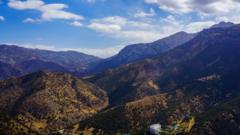
In a groundbreaking discovery in the grassy mountains of eastern Uzbekistan, archaeologists have unearthed the remains of two medieval cities which could significantly alter our understanding of the region's historical Silk Road connections. Long thought to primarily connect lowland urban centers, remote-sensing technology has now revealed these highland cities nestled at impressive altitudes, redefining the trade routes between East and West.The two significant sites, Tugunbulak and Tashbulak, are located over 2,000 meters (approximately 6,600 feet) above sea level, a region that is currently home to only 3% of the global population. Tugunbulak covers at least 120 hectares, marking it as a considerable metropolis during the Middle Ages from the 8th to 11th centuries under the influence of a dominant Turkic dynasty. “The history of Central Asia is now changing with this finding,” remarked Farhod Maksudov, an archaeologist associated with the research team.The exploration team, which consists of archaeologists from Uzbekistan and Washington University in St. Louis, utilized advanced lidar technology, which involves using reflected light to create detailed three-dimensional maps of landscapes. Michael Frachetti, a leading figure in the study, noted that the initial discovery of Tashbulak in 2011 set the stage for further research, which ultimately led to discovering Tugunbulak through a local forestry administrator's tip-off in 2022.Initial challenges included overcoming skepticism within the academic community regarding the existence and significance of these cities. The application of a drone equipped with lidar technology remarkably revealed extensive urban features, showcasing fortifications, intricate architectural designs, and complex infrastructures.The settlements likely thrived on iron production, utilizing natural resources available in the area. However, this enterprise may have contributed to the communities' eventual decline, as the region’s environment faced degradation due to heavy deforestation and instability from flash floods and avalanches. Experts from various institutions have praised the findings. Peter Frankopan, an authority on global history, described the excavation as an extraordinary treasure trove illuminating the deep interconnections throughout Asia. Zachary Silvia from Brown University emphasized the remarkable nature of high-altitude urban sites, stating that such discoveries are exceedingly rare and provide significant insights into the medieval urban landscape of Central Asia. This research not only expands knowledge about historical Central Asia but also promises an immense contribution to the study of urbanism in the region.