In brief
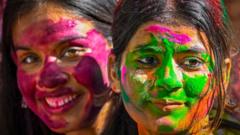
This year's Holi festivities have rejuvenated cities across India, as families unite in celebration filled with colors, traditional sweets, and age-old customs.
As the sun rises, millions of Indians have gathered in colorful attire to partake in Holi, the exuberant festival known for its vibrant powders and joyous spirit. This year, the spring celebration, symbolizing the victory of good over evil, marks winter's end and the beginning of fruitful harvest conditions.Communities across India are lighting bonfires, engaging in playful color battles, and indulging in traditional sweets, showcasing their culinary heritage. The festival, regarded as one of India's most significant cultural events, witnesses a massive influx of people returning to their hometowns, resulting in heartwarming reunions with family and friends.Cities like Mathura and Vrindavan are overflowing with exuberance, where the legendary love story of deities Radha and Krishna is heavily commemorated. Historical accounts highlight Holi as a time for agricultural gratitude, linking it to themes of fertility and prosperity, deeply rooted in ancient practices. Local dignitaries, including Mamata Banerjee, the chief minister of West Bengal, immerse in the colorful activities, signaling the festival's significance beyond mere celebration—the unity it sparks across diverse communities.Notably, in Vrindavan, a unique celebration transpires at a temple as widows traditionally participate in the festival, reimagining Holi as an occasion for joy and interaction. The sight of priests dancing amidst clouds of color against the backdrop of joy encapsulates the spirit of this festival, expressing inclusivity and shared happiness among all participants. As social media continues to buzz with Holi moments, images of playful celebrations and festive sweets remind the world of the beauty and joy this festival brings, reinforcing the essence of community and togetherness that transcends beyond the barriers of culture and age in India.