In brief
After nearly a month of burning, Amsterdam Island in the Indian Ocean has lost over half its area to wildfires, leading to evacuations and raising concerns for local biodiversity and long-term research initiatives.
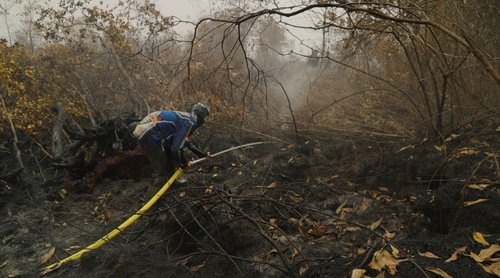
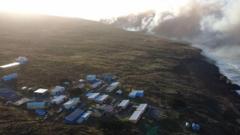
For the past month, Amsterdam Island, a remote French territory located in the southern Indian Ocean, has been engulfed by wildfires, impacting more than 55% of its 54 square kilometers. The island, situated between Australia, Antarctica, and Madagascar, lacks permanent residents but has been home to researchers since the 1980s. In light of the fierce blazes, 31 scientists were evacuated to nearby Réunion Island, as French authorities mobilized a response to control the situation.The fires are believed to have ignited near the Pointe Bénédicte observatory on January 15, as scientists were conducting atmospheric research. A report issued by the Laboratory for Climate and Environmental Sciences (LCES) noted that the inferno quickly spread toward the research station at Martin-de-Viviès, forcing emergency evacuations facilitated by a fishing boat unexpectedly present in the area.Rémi Chazot, a researcher on site, expressed gratitude for the boat's timing, acknowledging that had it departed on schedule, the evacuation might have turned perilous. The fires have proliferated further due to dry conditions and wind speeds reaching up to 40 km/h (24 mph), spreading through the island’s extensive peat bog network.Although the full extent of the damage remains to be evaluated, preliminary satellite images indicate that essential infrastructure, including solar panels and communication lines, has been compromised. Conservationists are particularly concerned about the potential effects on the island's rich wildlife diversity, including breeding populations of southern elephant seals, various albatross species, and the Southern rockhopper penguin.The island's remote and unique environment has made it an essential location for climate research, and the suspension of atmospheric studies marks a significant disruption in this work for the first time in 45 years. According to Marc Delotte, director of the LCES mission to Amsterdam Island, restoring normal operations will require significant time and resources.On February 7, a reconnaissance mission is expected to launch aboard a French navy vessel to assess the situation further. This mission will focus on securing the research base, identifying the fire's causes, and helping restore essential utilities on the island.