In a press conference, Starmer emphasized the strategic necessity of the deal, stating, "Failure to act now would expose the UK to significant risks and potential legal challenges that could jeopardize our military operations." The deal allows Mauritius to assert sovereignty over the islands while the UK and US keep military access to Diego Garcia for 99 years, with a potential 40-year extension.
The agreement has sparked mixed reactions domestically, particularly among opposition politicians, who argue that the decision could compromise national security by forging closer ties with Mauritius, a nation perceived as a Chinese ally. Conservative leader Kemi Badenoch criticized the agreement, describing it as a harmful concession to foreign interests. Reform UK's Nigel Farage echoed similar sentiments, suggesting that enhancing Mauritius's claims over Chagos plays into the hands of geopolitical rivals.
Hailing the deal as a milestone for Mauritius, Prime Minister Navin Ramgoolam expressed a strong desire for the resettlement of the Chagossian population, which has been historically affected by the UK’s colonial policies. However, the Chagossians’ voices remain divided on the agreement, with some expressing deep concerns over fair representation in negotiations that directly impact their ancestral home.
The Chagos Islands, a British Overseas Territory since the separation in 1965, have been the focal point of a significant international legal debate. The transfer and restructuring efforts come on the heels of a legal challenge that was brought by Chagossian residents. The court's dismissal of their claims has not quelled discontent among community activists who are wary of Mauritian governance.
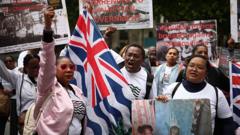
As Chagossians gathered in celebration in Mauritius upon learning of the deal, others in the UK expressed sorrow over the loss of their heritage. Activists continue to advocate for their rights and ancestral home, with pleas that they should not be sidelined in matters regarding their sovereignty.
The agreement is poised to be effective following the approval of both the UK and Mauritian parliaments, with its implications expected to resonate on international platforms, including the United Nations. As the geopolitical landscape continues to evolve, the Chagos Islands remain a pivotal point of contention echoing the complexities of colonial history and modern statecraft.
The agreement has sparked mixed reactions domestically, particularly among opposition politicians, who argue that the decision could compromise national security by forging closer ties with Mauritius, a nation perceived as a Chinese ally. Conservative leader Kemi Badenoch criticized the agreement, describing it as a harmful concession to foreign interests. Reform UK's Nigel Farage echoed similar sentiments, suggesting that enhancing Mauritius's claims over Chagos plays into the hands of geopolitical rivals.
Hailing the deal as a milestone for Mauritius, Prime Minister Navin Ramgoolam expressed a strong desire for the resettlement of the Chagossian population, which has been historically affected by the UK’s colonial policies. However, the Chagossians’ voices remain divided on the agreement, with some expressing deep concerns over fair representation in negotiations that directly impact their ancestral home.
The Chagos Islands, a British Overseas Territory since the separation in 1965, have been the focal point of a significant international legal debate. The transfer and restructuring efforts come on the heels of a legal challenge that was brought by Chagossian residents. The court's dismissal of their claims has not quelled discontent among community activists who are wary of Mauritian governance.
As Chagossians gathered in celebration in Mauritius upon learning of the deal, others in the UK expressed sorrow over the loss of their heritage. Activists continue to advocate for their rights and ancestral home, with pleas that they should not be sidelined in matters regarding their sovereignty.
The agreement is poised to be effective following the approval of both the UK and Mauritian parliaments, with its implications expected to resonate on international platforms, including the United Nations. As the geopolitical landscape continues to evolve, the Chagos Islands remain a pivotal point of contention echoing the complexities of colonial history and modern statecraft.