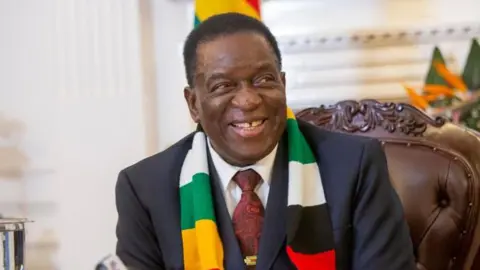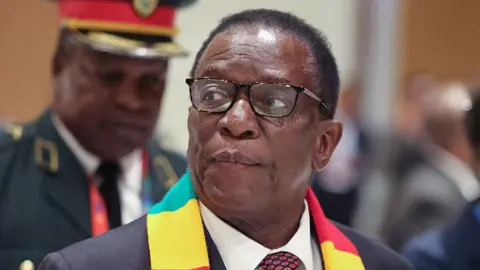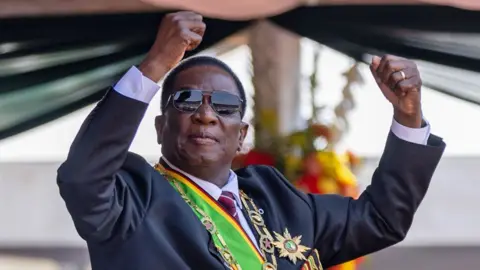
Zimbabwe's cabinet has approved draft legislation that would allow President Emmerson Mnangagwa, 83, to extend his stay in office until at least 2030.
Under the proposed changes, presidents would be chosen by Members of Parliament rather than through direct voting. This new structure could allow leaders to serve a maximum of two seven-year terms, up from the current five-year arrangement.
Justice Minister Ziyambi Ziyambi announced that public consultations would be conducted prior to presenting the bill in Parliament, where the ruling Zanu-PF party holds a dominant position.
Experts warn of potential legal challenges, suggesting that a referendum is necessary for any modifications to term limits as these alterations cannot benefit a sitting president.
Mnangagwa came to power in 2017 following a military coup that ousted long-time leader Robert Mugabe. He won a contested presidential election in 2018 and was reelected in 2023 under allegations of electoral fraud.
The push for extended rule comes as Mnangagwa's supporters have begun promoting the slogan, 2030 he will still be the leader, at party rallies, claiming his continued presidency is essential for advancing his Agenda 2030 development plan.
During recent internal conflicts, one of his leading critics, Blessed Geza, also known as Bombshell, passed away, leaving a vacuum in opposition to his rule within the party. Geza had previously accused Mnangagwa of nepotism and corruption.
The government maintains that the motivation behind the new law is to ensure political stability and solid governance as the country moves forward with its developmental agenda.