In brief
In Zambia, a concerning practice dubbed 'sextortion' is affecting female candidates seeking political positions. Government official Mainga Kabika revealed that women are being solicited for sexual favours by political parties in return for their selection as candidates for the upcoming general election. Calls for reporting such incidents and reinforcing legal measures against sexual harassment have grown as women currently hold only 15% of parliamentary seats.
A senior Zambian government official has said that some political parties were asking prospective female candidates for sexual favours in exchange for selection ahead of August's general election.
I am going to appeal to all female aspiring candidates to ensure that they record all these cases, Mainga Kabika, the civil service head of the gender division in the president's office, said on Monday.
She did not name the political parties involved.
Zambia has a significant gender imbalance in national politics, with around 15% of MPs being women. Their under-representation at leadership levels reflects deep-rooted cultural and structural barriers, a statement from the presidency said last year.
Kabika was addressing a conference of state prosecutors when she revealed that women had been in touch with her about what they were being asked to do.
I can confirm to you right now that I am actually receiving a lot of messages; some of them are already on record… they are reporting that they are already being asked for sexual favours in exchange for adoption [as candidates], and this is unacceptable, she said.
This situation is very troubling as it discourages many women from participating in politics, particularly as candidates,'' Beauty Katebe, who chairs the board of the Non-Governmental Gender Organisations Coordinating Council, told the BBC.
She added that many women had experienced what she described as sextortion during the nomination process and encouraged those affected to report such cases. Katebe, however, acknowledged the challenges faced due to cultural biases and the embarrassment that the victims normally face.
She called for the establishment of a fast-track court to handle allegations swiftly and suggested that laws must be stiffened to discourage the sexual harassment of women. If they were being exposed, they would definitely stop, she said of alleged perpetrators.
Katebe argued that patriarchal tendencies in political parties have impacted women's participation.
In its statement on gender disparities last year, the president's office acknowledged that while there had been some high-profile female appointments in politics, including Vice-President Mutale Nalumango, there is still a long way to go.
It noted that 28% of civil service directors were women, and out of the 36 CEOs of state-owned enterprises, just five were female.
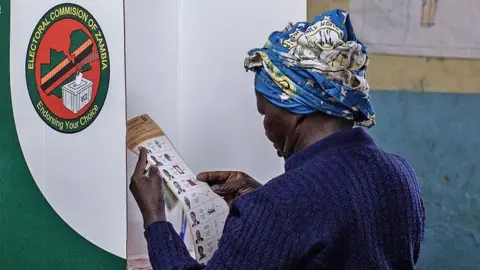
The general election is scheduled for 13 August, when Zambians will be electing a president, MPs, councillors, and council chairs.