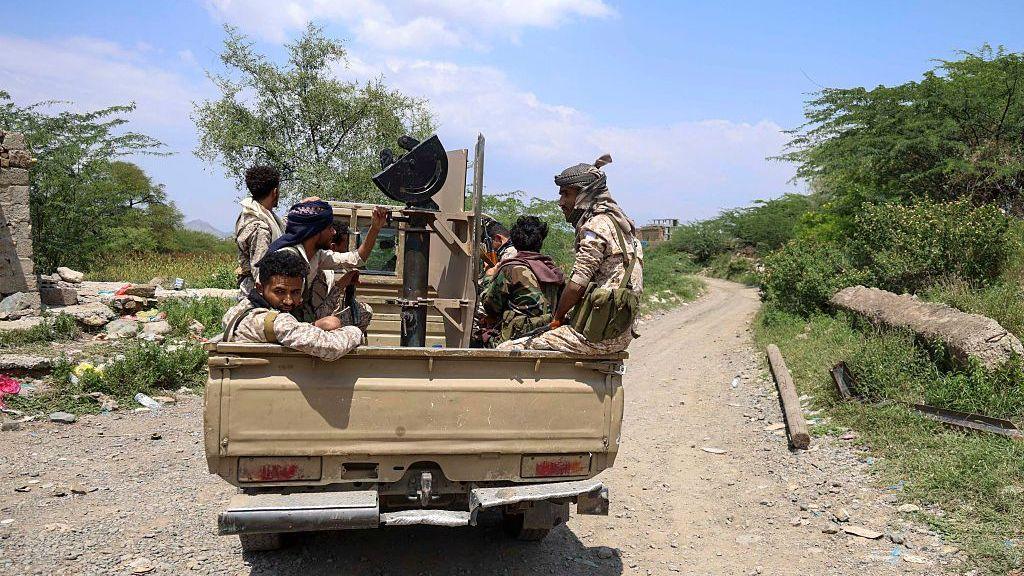

Yemen’s internationally recognised government has declared an all‑out war to recapture territory seized by the Iran‑backed Houthis.
The pledge follows a night of mutual strikes: the Houthis reported hitting Saudi Arabia’s Aramco facilities after a barrage of 50 Saudi‑led coalition airstrikes in 12 hours, while Saudi forces have intensified pressure on Houthi positions across the country.
In a televised address from Riyadh, President Rashad al‑Alimi vowed, "Today, I announce the start of military operations to retake the remaining territory of the republic and extend the authority of the state across the entire national territory." The statement is widely seen as the green light from Saudi Arabia, which backs the Yemeni government.
The conflict’s front line has settled around Taiz, still under government control, which the Houthis have almost encircled by cutting the supply route to Aden. Sources described the move as an attempt to isolate Taiz, if not yet fully seize it.
The Saudi‑led coalition has carried out air strikes on Houthi positions in Sanaa, Saada and near Taiz, while the Houthis claim to have struck Saudi oil sites in Riyadh and Khurais. The prospect of an expanded showdown threatens not only Yemen’s stability but also the global oil market.
Yemen remains one of the poorest countries in the world, with a humanitarian crisis that has intensified since the war erupted in 2014 when the Houthis seized the capital. The recent offensive, aimed at taking back the entire Red Sea coast, has forced Saudi Arabia into direct confrontation with its rebel allies, magnifying regional tensions.
The international community is watching closely as the fighting escalates, with delivery of aid hampered and civilian casualties mounting. The world’s attention is now on the potential ripple effects of a full‑scale war that could destabilise already fragile Gulf and regional economies.