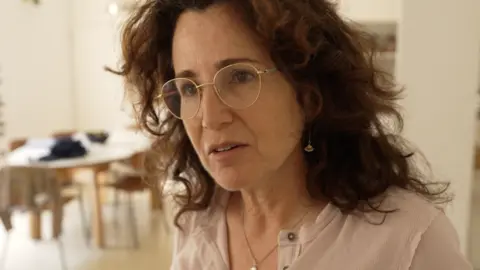
Standing next to the blown-out windows and cracked walls of her apartment in Tel Aviv, Liat Zvi voices an exasperation many Israelis say they feel.
It's depressing… we've been in war for two and a half years and this just feels like another round, she sighs.
Six weeks ago, her central neighbourhood was among the many locations where Tehran delivered its response to US-Israeli attacks.
An Iranian missile evaded Israel's multi-tiered air defence and smashed into a residential building, killing 32-year-old carer Mary Anne Velasquez de Vera from the Philippines.
This was the first fatality in Israel during the war with Iran – a conflict that's currently on a precarious pause.
Now, like many of her fellow Israelis, Zvi is asking herself what this conflict actually achieved for her country and is finding it hard to contemplate what happens next.
New polling by the Hebrew University of Jerusalem points to war-weariness among Israelis. But it also suggests two thirds oppose the current tentative truce between Washington and Tehran.
Despair was the word a third of respondents chose when asked to describe their current emotion, followed by confusion and anger. Removing Iran's ability to develop a nuclear weapon, destroying its ballistic missile capability, and securing regime change were three aims cited at the start of the campaign.
While polling reflects skepticism about the effectiveness of military action, a slight majority still supports continued strikes against Iran. The dynamics of public sentiment reveal a divided Israeli populace, particularly between Jewish and Arab citizens regarding the future of the conflict.
As negotiations between Israel and Lebanon approach, the outlook remains uncertain, with many calling for robust military responses against groups like Hezbollah before a true ceasefire can be established.