In brief
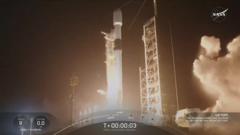
Two private lunar landers from the U.S. and Japan embarked on a mission to the Moon aboard a Falcon 9 from Kennedy Space Center early Wednesday.
In a significant advancement in lunar exploration, SpaceX has successfully launched two private lunar landers into space via its Falcon 9 rocket. The take-off occurred from the Kennedy Space Center in Florida at 01:09 AM local time (06:09 GMT) on Wednesday, carrying landers from America’s Firefly Aerospace and Japan’s ispace. Their journey marks a milestone in increasing commercial activity targeting the Moon, as these landers are set to separate and conduct independent operations upon entering lunar orbit.Firefly Aerospace’s Blue Ghost rover is expected to take approximately 45 days to reach the Moon. Once operational, it will perform a range of tasks including drilling, collecting samples, and capturing X-ray images of Earth’s magnetic field. These efforts aim to enhance research for future human missions to the Moon and shed light on how space weather influences Earth. On the other hand, ispace's Resilience lander is projected to reach the Moon’s surface within five months. Upon landing, it will deploy a rover for further exploration and attempt to gather loose surface material, referred to as regolith. This mission receives backing from NASA, marking potential success as the largest commercial delivery to the Moon to date. Notably, Intuitive Machines achieved a groundbreaking feat last year as the first commercial entity to land on the Moon, following in the footsteps of established space powers such as the US, Soviet Union, China, India, and Japan. In related developments, SpaceX is simultaneously preparing its seventh orbital flight test of the Starship rocket, set for lift-off from Texas later in the day. This dual focus underscores SpaceX’s pivotal role in shaping the future of space exploration.