In brief
As the 2026 Winter Olympics approach, understanding the creation and maintenance of Olympic ice is crucial. Skilled ice masters ensure that the surface meets the unique requirements of each sport, from curling to hockey and figure skating. Factors such as water purity and external conditions play a vital role in achieving the optimal ice quality for top-tier athletes.
Olympic ice describes the uniform ice surface specified for international competitions, including the Winter Olympics.
Skilled technicians are responsible for making and maintaining the ice, known as 'ice masters'. The team is tasked with ensuring the surface is optimal for athletes competing in sports such as curling, ice skating, and ice hockey.
The ice hockey arena in Milan-Cortina was built from scratch for the upcoming matches, following delays and last-minute building works. But how do they create the ice for the rink?
It all starts with a five-centimeter layer of insulation laid on the concrete floor. A vapor barrier is placed on top, followed by mats containing glycol to keep the ice cold. Boards and glass walls are then erected around the rink, followed by roughly two inches of water that creates the initial ice sheets. The surface is painted white and marked with hockey logos.
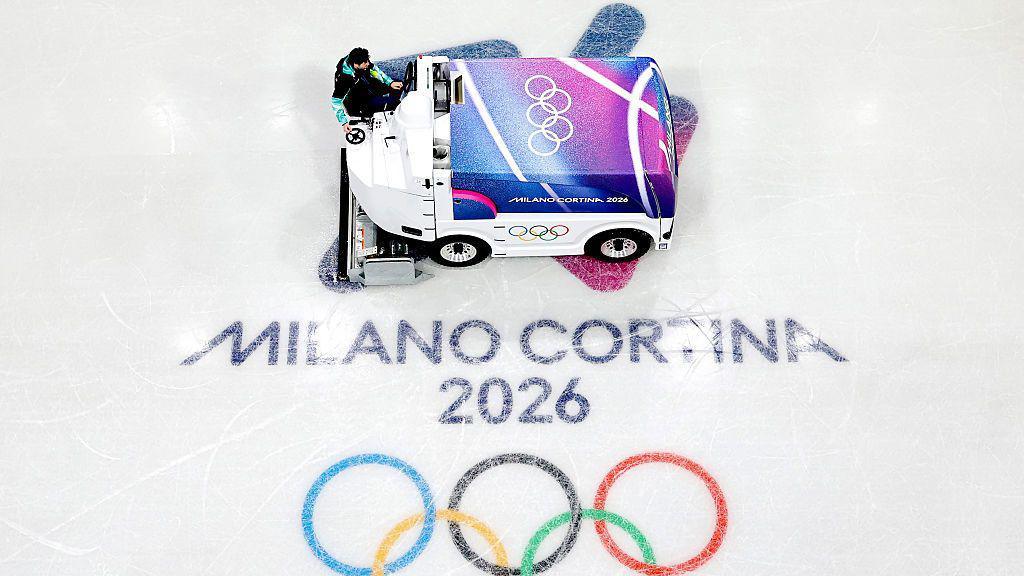
Finally, the rink is topped with another three to four centimeters of water to form the playing field, with temperatures maintained between -5 and -4°C. Regular resurfacing machines, colloquially known as Zambonis, are deployed to shave off layers of ice and ensure a smooth finish.
Ice master Mark Messer, overseeing long track speed skating, emphasized the challenges of adapting to new systems for high-profile events with limited preparation time. Before this Olympics, creating ice on temporary settings had not reached this scale.
Every winter sport at the Olympics demands a distinct ice quality to enhance athletic performance. For instance, curling requires a pebbled texture, whereas ice hockey benefits from a harder surface. Long track speed skating uses the coldest, thinnest ice to optimize speed.
The transition between events, such as figure skating and short track speed skating at the same venue, adds another layer of complexity for technicians, who must adapt the surface conditions within just a few hours.
Purity of water is also crucial, as ice masters test and purify water to eliminate impurities. Factors including sudden temperature changes and venue conditions can easily affect the ice quality, illustrating the intricate balancing act involved in maintaining the ideal rink for Olympic competitors.