By Bernd Debusmann Jr
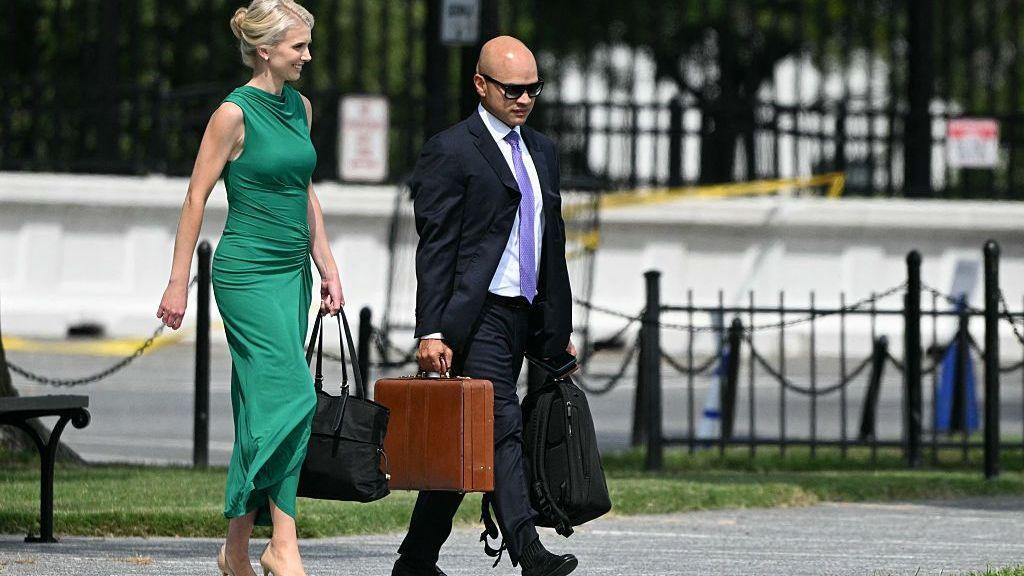
Former president Donald Trump has handed monetary gifts worth a total of $157,000 to a handful of his highest‑profile White‑House staffers, per official financial filings released by the administration. The largest of the gifts – a cash present of $45,000 (£33,000) – went to his longtime aide Natalie Harp. Two other aides received the same amount, while both Walt Nauta, director of Oval Office operations, and Margo Martin, communications advisor, received $22,000 each.

White‑House officials issued a statement explaining that such gifts “have nothing to do with anyone’s official duties” and are entirely permissible under U.S. law. They added that Trump has a longstanding practice of giving holiday presents to “people in his orbit, including employees and aides, both in government and in the private sector.”
Now, however, the move is being examined by law experts. Cassandra Burke‑Roberston, director of the Center for Professional Ethics at Case Western Reserve University, cautioned that “if it were compensation, it’s not allowed” and that the gifts might still raise eyebrows amid a broader perception of conflicts of interest around the former president’s tenure.
The other 91 named staffers did not appear on the list of recipients, which has prompted questions about disclosure and selection criteria. Nonetheless, this is the first public instance of a serving U.S. president handing cash gifts to private‑sector‑style staffers, a practice that, while not unprecedented for symbolic tokens, raises fresh ethical questions for contemporary Washington.
In contrast, past presidents have historically given physical mementos such as framed neckties or artifacts. President Barack Obama, for example, gave former press secretary Robert Gibbs a framed necktie he once borrowed. The new cash payments underscore how the lines between personal generosity and potential influence can blur in the White‑House context.