In brief
A recent Israeli airstrike on a civil defense center in the southern Lebanese town of Harouf killed six people, including three paramedics, as tensions escalate around a fragile ceasefire agreement. The U.S. State Department has confirmed the extension of the ceasefire after negotiations waged in Washington, hoping to lay the groundwork for sustained peace between the two nations.
An Israeli air strike on a town in southern Lebanon has killed six people, including three paramedics, according to Lebanon's health ministry. It comes as the US said the two countries had agreed to a 45-day ceasefire.
The health ministry stated that a fourth paramedic sustained critical injuries following the attack on a civil defence center in the town of Harouf. The BBC has reached out to the Israeli military for a comment.
On Friday, the U.S. State Department announced that Israel and Lebanon had agreed to extend their ceasefire after two days of negotiations in Washington, D.C.
U.S. President Donald Trump initially announced the truce on April 16, although both Israel and Hezbollah have continued to engage in hostilities since then.
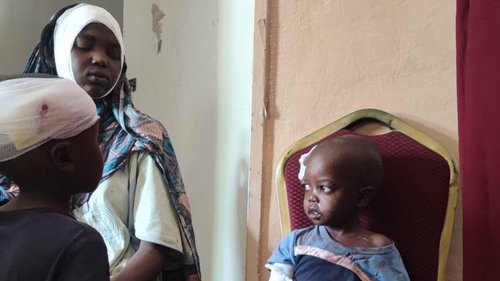
Earlier this week, Lebanon's health ministry reported Israeli air strikes had killed 22 people, including eight children, in the south.
State Department spokesman Tommy Pigott expressed hope that ongoing discussions would foster lasting peace, mutual recognition of sovereignty, and genuine security along the shared border.
The State Department plans to reconvene political negotiations in June, with a security track scheduled to commence at the Pentagon on May 29 involving military representatives from both nations.
Yechiel Leiter, Israel's ambassador to the U.S., described the negotiations as frank and constructive. Meanwhile, Lebanese Prime Minister Nawaf Salam emphasized the need to galvanize Arab and international support for their negotiating stance against Israel.
Reports indicate that Hezbollah and Israeli forces have engaged in daily exchanges of fire across the southern border of Lebanon since the ceasefire's inception, with Israel intensifying its air and artillery strikes, claiming to target Hezbollah fighters and infrastructure.
Lebanon's health ministry has accused Israel of deliberately targeting civilians and paramedics, a claim Israel refutes. The Israeli military argues that it is seeking to establish a buffer zone in southern Lebanon to prevent future attacks from Hezbollah.
Notably, entire villages have faced destruction from these military actions, analogous to tactics used in Gaza, with human rights groups asserting that some instances may constitute war crimes—an assertion denied by Israel.
Hezbollah has also conducted attacks against Israeli troops through rockets and drones, further escalating tensions. Southern Lebanon serves as the stronghold for Hezbollah, supported predominantly by the Shia community, and has been subjected to continuous Israeli bombardment.
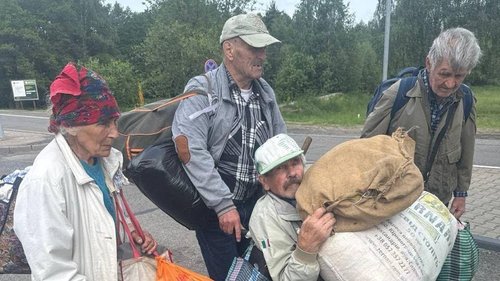
In the wake of mounting hostilities, over one million individuals, representing one-fifth of the Lebanese population, have been displaced from their homes, primarily from southern areas, the eastern Bekaa Valley, and the southern suburbs of Beirut known as Dahieh, where Hezbollah remains influential.
Since the conflict erupted on March 2, following a joint U.S.-Israeli attack on Iran, at least 2,896 people have lost their lives in Lebanon according to governmental sources, while Israeli reports cite 18 soldiers and four civilians killed over the same timeframe.