In brief
The booming illegal trade of giant African harvester ants in Kenya has drawn attention to unexpected wildlife trafficking. As these ants, particularly their queens, are sought after by collectors around the globe for their unique characteristics, they have become a significant source of income for local traffickers. The black market has surged, prompting calls for stricter regulations to protect both the species and local ecosystems.
The ants are flying in Kenya at the moment. During this rainy season, swarms can be seen leaving the thousands of anthills in and around Gilgil, a quiet agricultural town in Kenya's Rift Valley that has emerged as the centre of a booming illegal trade.
The mating ritual sees winged males leave the nest to impregnate queens, who also take flight at this time. This makes it the perfect time to chase down queen ants to sell on to smugglers who are at the heart of a growing global black market, that taps into the pet craze for keeping ants in transparent enclosures designed to observe the insects as they busily build a colony.
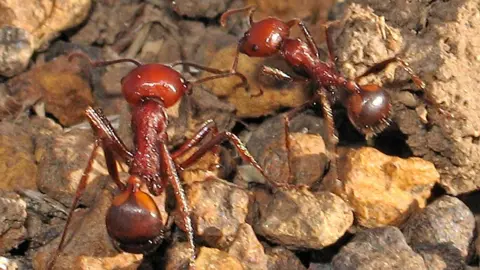
It is the giant African harvester ant queens, which are large and coloured red, that are most prized by international ant collectors – one can fetch up to £170 ($220) on the black market, which tends to operate online.
A single fertilised queen is able to create a whole colony and can live for decades – and can be easily posted as scanners do not tend to detect organic material.
At first, I did not even know it was illegal, a man, who asked not to be named, told the BBC about how he had once acted as a broker, linking foreign buyers with local collection networks.
Also known as Messor cephalotes, these ants are native to East Africa and known for their distinctive seed-gathering behaviour making them popular with ant collectors.
The scale of the illicit trade in Kenya became apparent last year when 5,000 giant harvester ant queens - mainly collected around Gilgil - were found alive at a guest house in Naivasha, a nearby lakeside town popular with tourists.
Authorities warn that such unsustainable harvesting could potentially disrupt ecosystems and threaten biodiversity. Conservationists are now calling for increased protections for all ant species under the Convention on International Trade in Endangered Species (Cites), as currently no ant species is listed.
This burgeoning market not only raises ethical concerns, but could also lead to significant ecological consequences if invasive species were introduced to new habitats.
With calls for stricter regulations, there are emerging dialogues regarding the commercialization of the species to ensure sustainable practices and the protection of local ecosystems. The future may very well depend on this trade's potential to be harnessed for ecological benefit while mitigating the ongoing risks of illegal trafficking.