In brief
In West Bengal, politicians are waving fish during election campaigns, using the familiar symbol to evoke cultural identity and mobilize voters. The fish has become more than food; it's a political tool amidst the rivalry between the ruling Trinamool Congress and the opposition BJP. This strategy highlights the deep connections between culture, food, and politics in a state where fish is central to everyday life.
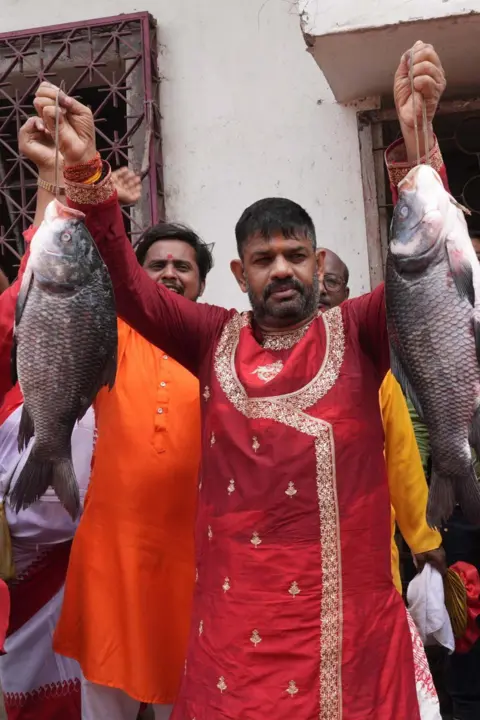
On a sticky morning in Kolkata, Koustav Bagchi moves from door to door in traditional attire with a fish in hand, as drums thud behind him and supporters chant his name. Bagchi, the BJP's candidate from Barrackpore for the upcoming West Bengal assembly elections, is using the fish to symbolize his connection to the voters.
In nearby port areas, another BJP candidate, Rakesh Singh, also brandishes fish during his campaign against city mayor Firhad Hakim. For many in Bengal, fish transcends mere sustenance; it’s interwoven with culture, ritual, and identity.
The practice of holding fish in campaigns is a strategic choice amid rising concerns about cultural encroachment represented by the BJP, known for its associations with vegetarianism. Prime Minister Modi's party is often perceived as enforcing moral dietary standards, which contrasts sharply with the preferences of Bengal's predominantly non-vegetarian populace.
In an election climate where food has become a political battleground, fish now symbolizes both identity and resistance against the perceived vegetarian imposition of the BJP. The Trinamool Congress, led by Chief Minister Mamata Banerjee, has vocally defended the state's culinary traditions, claiming the BJP threatens Bengal's food culture.
Banerjee’s claims highlight the state’s reliance on fish, asserting, The BJP will not allow you to eat fish, meat, or eggs, during her campaign meetings, reinforcing the cultural significance of fish consumption in Bengal.
In response, BJP leaders have downplayed these accusations, asserting a commitment to protect Bengali dietary customs. They argue that the ruling party's focus on fish in their campaigns reveals the centrality of cultural identity and the complexities of political rivalry in the region.
Polls indicate that around 65.7% of West Bengal residents consume fish weekly, and its political significance is underscored by historian Jayanta Sengupta's observations on how intertwined fish is with the region's cultural landscape.
As the election date approaches, both major parties are leveraging the fish as a potent symbol of cultural pride, identity, and an assertion of belonging, weaving traditional practices into the broader narrative of political campaigning. The outcome remains uncertain, but the fish has undeniably shaped the discourse on identity and culinary heritage in Bengal’s electoral politics.