In brief
In the heart of war-torn Kolkata during the 1940s, KC Sen emerged as a trailblazer in the city's music landscape, leading musicians amidst air raids to create jazz recordings for charity. His legacy includes founding Band Wagon, a talent agency that propelled local artists to stardom and fostered a thriving live music circuit in Kolkata.
In 1940s Calcutta (now Kolkata), as Japanese air raids rattled the city, a group of musicians traveled by horse carriage to a recording studio, dodging sirens. The building was exposed, its only defense hand-dug trenches. At each siren wail, the musicians were trained to dive for cover - sometimes mid-session.
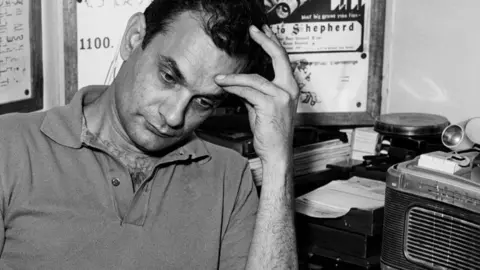
At the center of it all was Kumar Chunder, or KC, Sen. He would go on to become one of the city's most influential - and largely forgotten - cultural figures: a war correspondent, jazz bandleader, and, most notably, the founder of Band Wagon, a pioneering talent agency that helped shape modern Kolkata's music scene.
That wartime recording, whose proceeds went to the East India War Fund, reflected Sen's defining instinct - making and managing music amid chaos. Pressed as a 78 rpm disc, it featured songs like The Good Ship Victory and There Comes a Time. It was a commercial and philanthropic success, earning official praise and continuing to raise funds for years - a lasting testament to his refusal to let war silence music.
Born in 1919, Sen straddled two worlds. On his mother's side, he was descended from Lt Gen Sir Edward Barnes, a veteran of the Battle of Waterloo; on his father's, from the 19th-Century Bengali reformer Brahmananda Keshub Chandra Sen.
He grew up in Kolkata, moving between a convent school and a prestigious Jesuit boys' school where he first discovered music while cleaning instruments in the music room. Music ran through the household. His eldest sister Moneesha was a concert pianist; his sister Pamela a prima ballerina; and the youngest, Bunny, a regular voice on All India Radio.
As a teenager, Sen made his debut on Park Street - the city's swinging cultural hub - performing at the San Souci Theatre. A pianist and guitarist, he emerged as a multi-instrumentalist, singer-songwriter, and jazz bandleader.
Sen was a jack of many trades. A gifted athlete, he became the first Indian to win the Macklin Sculls - a prestigious single sculling race - at the Calcutta Lake Club in 1938. After an engineering apprenticeship, he left for the Burmese front as a Reuters correspondent. In Lashio, in present-day Myanmar, shrapnel from a Japanese air raid left a dent in his helmet - a stark reminder of how close he came to death.
Even during the war, he continued composing music. These years of collaboration led to several of his original compositions being pressed into 78 rpm shellac records. Among them was Why Should I Dream, recorded with Bombay-based crooner Lorna Shortland, Anglo-Indian guitarist Garney Nyss, and his group, The Aloha Boys. He also wrote Moonlight in Hawaii, predated a Hollywood film of the same name by several years.
By the end of World War Two, Sen had returned to Kolkata as head of programming at All India Radio. He formed the Casual Club Quintet, earning an honorable mention in Melody Maker, one of Britain's most influential music weeklies.
His influence was now expanding beyond performance. With backing from people including the Maharaja of Cooch Behar, he founded the Calcutta Swing Club - an institution that, for jazz, echoed what the Calcutta School of Music was doing for Western classical traditions in the city.
At the city's New Empire Theatre, he orchestrated several big-band concerts with maestros from Bombay and popular vocalists. However, his most transformative endeavor came in 1953 with the launch of Band Wagon, which evolved into a glossy weekly that combined showbiz with sports.
It helped professionalize Park Street's nightlife, transforming its watering holes into platforms for emerging local talents. A regular columnist for Junior Statesman, Sen spotlighted performers through weekly Sunday auditions at the New Empire Theatre, feeding into four annual Band Wagon showcases.
For a generation of musicians, Band Wagon became a launchpad, fostering artists like Marie Sampson and Shirley Churcher.
Sen's influence also reached Tollywood, Bengal's film industry, most notably connecting filmmaker Satyajit Ray with cabaret performer Vicky Redwood, leading to Redoood's casting in Ray's acclaimed film Mahanagar.
The curtain on Sen's long association with Kolkata fell with a poignant signing-off radio broadcast in 1975. He retired to Ashford in the UK, passing away in 2007, but his legacy continued through his sons Neil and Robin, who performed and recorded in Kolkata.
He could recognize talent, his son Robin recalled. If he saw even a little, he would work to turn it into something - whether they could stand up, sing or dance. On the Calcutta scene, there had to be somebody who knew what the hell they were talking about. That was him.