In brief
A pod of 157 false killer whales stranded near Arthur River, Tasmania, resulting in the euthanasia of 90 surviving whales due to challenging conditions and extreme stress. Despite attempts to rescue, local experts deemed euthanasia as the only option.
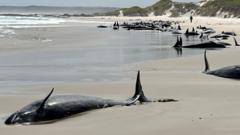
Australian authorities have made the difficult choice to euthanise around 90 false killer whales that survived a mass stranding on a remote beach in Tasmania. The pod of 157 whales stranded near Arthur River in the north-west corner of the island, with many dying shortly after the event. Experts stated that complicated conditions made it impossible to save the animals, which had been stranded for 24 to 48 hours and were under significant stress.In a region that has seen several mass whale strandings in recent years, such as the 2020 incident involving hundreds of pilot whales, this event marks a notable but distressing occurrence, as false killer whales have not stranded in Tasmania for over half a century. Marine biologist Kris Carlyon described the site as one of the most challenging locations he has encountered in 16 years, highlighting the difficult access to the area, with only rough, steep roads allowing limited transportation of rescue equipment.Local residents witnessed the tragic scene, with one describing the distress of the animals, including mothers and their babies, appearing to seek help. Volunteer efforts to return the whales to the sea were thwarted by rough conditions, with experts confirming that the whales could not navigate past the surf to safety.The decision to euthanise the remaining whales was made by wildlife veterinarians, emphasizing that prolonged stranding leads to suffering for the animals, making euthanasia a last resort. The euthanasia process is expected to begin on Wednesday and continue into Thursday.Authorities are also considering how to manage the disposal of the carcasses, noting the site's cultural significance to Aboriginal people. Meanwhile, they have requested that the public stay away from the site due to nearby bushfires and limited access.Most whale strandings in Australia, particularly in Tasmania, occur on the west coast, underscoring the vulnerability of these highly social mammals, which can strand in groups due to disorientation caused by following prey or collective lead by individuals.