In brief
Delving into the life-saving antivenom programs in Australia, skilled professionals like Emma Teni extract venom from some of the world's deadliest spiders and snakes, transforming their lethal potency into life-saving medicine. Utilizing a community-driven approach, these wildlife experts ensure that victims of bites are protected and treated effectively.
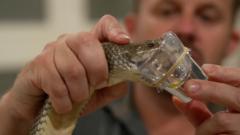
With a pair of bright pink tweezers, Emma Teni carefully engages with a large funnel-web spider, preparing to draw out its venom for extraction. Housed in the Australian Reptile Park's spider milking room, she routinely milks up to 80 of these lethal creatures, with Sydney funnel-webs considered among the world's most perilous spiders. With grim statistics darkening the backdrop—historically, a young child once succumbed to a bite in merely 13 minutes—Australia's antivenom program has effectively mitigated these risks, ensuring that since its inception in 1981, no fatalities due to the spider have occurred.Emma, affectionately known as "spider girl," emphasizes the importance of the community’s role in this initiative, as members of the public frequently bring in captured spiders for milking. She highlights that the potent venom, which can kill within minutes, can serve a beneficial purpose when harnessed for antivenom. Indeed, a series of weekly pickups across Sydney allows the team to collect these spiders and operate a thriving antivenom program pivotal to public safety.Charlie Simpson, a local handyman, recently overcame his fear of spiders through encounters with these arachnids, understanding their role in saving lives rather than posing threats. He conveyed, "I kept getting told you're meant to take them back to be milked," as he presented a spider to Emma, reinforcing the notion that awareness can redefine perceptions of fearsome creatures.Moving beyond spiders, venom from snakes is also collected and stored at the park for antivenom development. With the World Health Organization noting significant fatalities globally from snake bites, Australia's figures are significantly more favorable due to robust antivenom measures, which have proven effective at minimizing the harm from these creatures.When venom is collected, such as from the King Brown snake, it requires careful handling; however, Billy Collett, the park's operations manager, reassures the public that these snakes do not typically seek out human encounters. Collett intricately details the process of milking a snake to extract venom—a crucial resource that will undergo rigorous processing, including the incorporation of horse and rabbit antibodies to create an effective antidote.In collaboration with CSL Seqirus, every vial of venom allows for the annual production of a vast quantity of antivenom, ensuring that rural and remote regions have access to life-saving treatments. As Australia extends its generosity beyond its borders, assisting neighboring Papua New Guinea with antivenom, it highlights the deep-rooted belief in a community-oriented perspective where awareness, education, and involvement transform danger into opportunity for health and safety.Thus, in Australia's wild and unpredictable landscape, the infamous menace of creatures like snakes and spiders is countered with strategic intervention and community support, mirroring the synergy of life and death while ultimately prioritizing public health and safety.