In brief
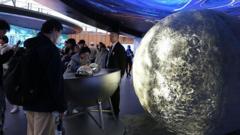
In a surprising move, China has decided to share lunar rock samples obtained from its Chang'e-5 mission with researchers from six countries, including two US institutions. This collaboration emerges amidst an ongoing trade war between the United States and China, demonstrating a rare instance of scientific unity despite political tensions.
Chinese researchers remain unable to access NASA's lunar samples due to restrictions imposed by U.S. lawmakers. In contrast, the China National Space Administration (CNSA) announced Thursday that scientists from institutions like Brown University and Stony Brook University, alongside teams from France, Germany, Japan, Pakistan, and the UK, will be able to study the recently acquired moon rocks. CNSA chief Shan Zhongde emphasized that these samples symbolize "a shared treasure for all humanity."Remarkably, the Chang'e-5 samples are believed to be about a billion years younger than those collected during the Apollo missions, suggesting more recent volcanic activity on the Moon. John Logsdon, former director of the Space Policy Institute, noted that the examination of lunar rock samples has "nothing of military significance," highlighting the importance of international scientific cooperation.While the U.S. and China have been locked in a bitter trade rivalry, with hefty tariffs imposed on goods from both countries, this exchange indicates a potential shift in focus towards collaborative science. Shan asserted that the CNSA would continue to foster international partnerships in space exploration as part of China's expanding role in global research.Overall, this moment highlights the complex relationship between scientific inquiry and geopolitical realities, presenting new avenues for collaboration despite existing restrictions.