Pope Leo XIV visits Canary Islands to spotlight perilous migrant journeys
On Thursday Pope Leo XIV began a 7‑day tour of Spain’s southernmost territories, including Gran Canaria and Tenerife, to draw attention to the deadly routes people take across the Atlantic in search of a better life.
Bakary Jaiju: A harrowing 7‑day voyage
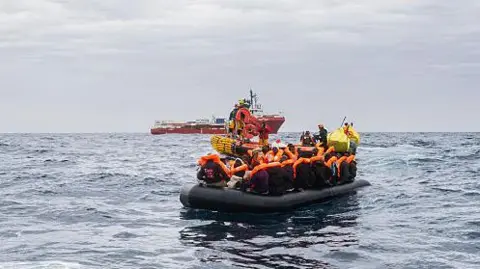
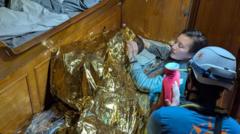
Bakary Jaiju was 19 when he boarded a wooden boat in the Gambia and set out for Europe. He endured seven frightening days on the sea as his supplies of food and water dwindled, finally arriving in Tenerife after last year’s late summer voyage.
He told us that the journey was so dangerous that one could not even sleep, lest one fall into the water. "I decided to go whether I survive or I die, because I want my family to be in a good condition," he said, explaining why he left his wife and baby behind and paid smugglers to get a boat.
Since his arrival, hundreds more have died trying to reach the islands, with many crews and boatloads disappearing without a trace.
Pope’s call for safe, legal pathways
During his visit the Pope will emphasize the need for alternative, safe and legal routes into Europe and appeal for a humane approach that respects those who risk their lives. In Gran Canaria he will drop flowers into the waves in memory of migrants who never made it across the Atlantic.
Spain’s regularisation policy
Madrid’s government is currently allowing hundreds of thousands of undocumented migrants to regularise their status. Anyone who arrived before last December can apply for residence and work permits, a rare window that is still open before the deadline.
The move has provoked criticism from Spain's opposition, with the conservative Popular Party decrying an “irresponsible” policy and the far‑right Vox labeling it an “invasion” that could collapse public services. The Socialist government, however, views the policy as a pragmatic solution to a shrinking, ageing population that needs more workers.
Local support for young migrants
Padre Pepe, a Spanish priest, runs an organisation that helps migrants and refugees find work once they become adults. He says that the labour market could absorb many of the young men who arrive, yet they often find themselves without jobs once they leave state care.
One of his trainees, Tiene Lama, now works at a car‑repair shop in Gran Canaria, sending hundreds of euros back to his family in Ivory Coast.
Changing tone amid tightening borders
As the Pope pushes for more humane attitudes, a new EU pact will go into effect this week, aimed at tightening border controls and making detention and deportation easier for those arriving by sea. While it may have little deterrent effect for people like Bakary Jaiju, it raises alarm among human‑rights groups over the potential cruel treatment of asylum seekers. Officials in the Canary Islands, where the policy will be tested, call for a framework that lets migrants travel safely and work legally rather than being expelled.