In brief
A deep dive into India's road safety crisis reveals systemic failures in infrastructure and enforcement, leading to a tragic toll of lives lost on the roads.
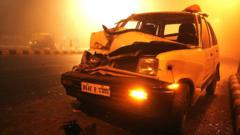
In 2023, India faced a grave road safety crisis, with statistics indicating more than 480,000 road accidents that led to over 172,000 deaths. The harsh reality is that every day, an average of 474 lives are claimed on the roads—equating to nearly one death every three minutes. Tragically, among those fatalities were 10,000 children, highlighting the urgent need for effective measures.Reports detail daily accidents ranging from buses tumbling into gorges to pedestrians struck by intoxicated drivers. Minister of Road Transport and Highways, Nitin Gadkari, addressed these shocking trends at a recent road safety event, citing preliminary data that paints a grim picture. Overcrowded roadways and high-risk behavior, particularly over-speeding, have emerged as leading causes of these tragedies.While efforts have been made to improve safety, significant gaps remain in enforcement and education regarding traffic laws. Alarmingly, 54,000 deaths were attributed to riders not wearing helmets, while 16,000 died due to a lack of seatbelt use. Inadequate safety measures, such as old vehicles lacking modern safety features, contribute to the crisis, alongside a chaotic traffic environment mingling various forms of transportation—motorized and non-motorized.Gadkari acknowledged that human behavior is a significant factor in road accidents. However, experts argue that a lack of proper infrastructure also plays a critical role. Investigations have revealed issues in road design and maintenance practices, including insufficient barriers and improperly placed median dividers, which can exacerbate accidents instead of preventing them.As a solution, proposals to upgrade road infrastructure, including expanding highways, have been put forth. However, experts like Kavi Bhalla express skepticism, warning that simply building wider roads could lead to increased speeds— disproportionately endangering pedestrians and cyclists.To combat this ongoing crisis, strategies such as the "5Es" framework — focusing on Engineering, Education, Enforcement, and Emergency care — have been recommended. In certain states, targeted interventions based on this model have yielded safer results.As India continues to grapple with its road safety issues, the focus must shift towards sustainable development that prioritizes the lives of all road users, especially the most vulnerable. Without proactive measures and thorough evaluations of implemented strategies, the current trend of increasing fatalities on Indian roads is unlikely to reverse.