In brief
A black‑furred primate with vivid orange lips has been confirmed as a new species after a decade‑long search. The discovery was made in Lomami National Park, where the monkey hides high in the treetops. The team used photography, audio recordings and genetic testing to classify it as *Colobus congoensis*. The find raises concerns about hunting pressures but offers hope for conservation protections.
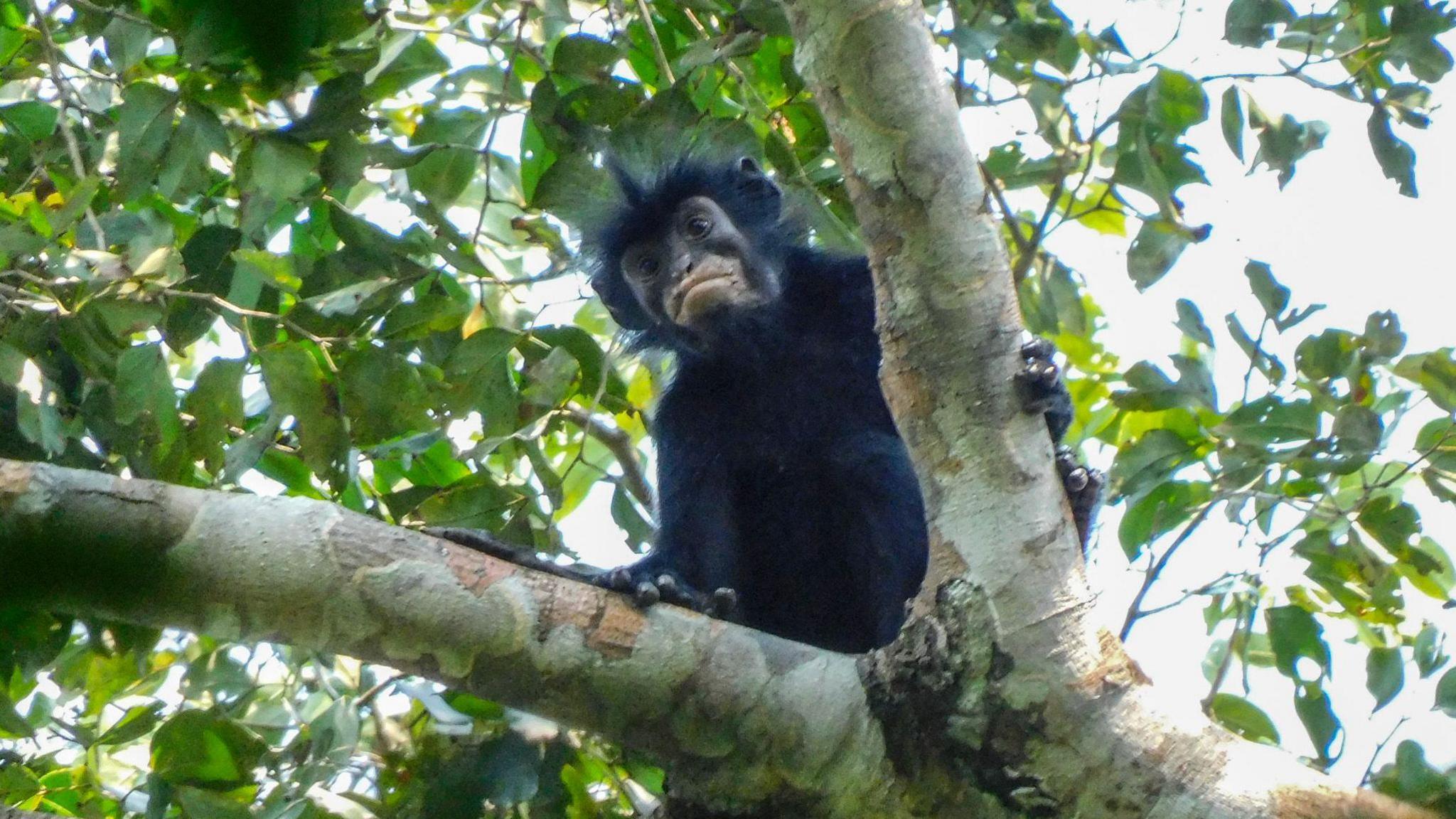
Scientists have officially discovered a new species of black‑furred primate in the dense tropical forests of the Democratic Republic of Congo. The animal, which locals call “Likweli,” is marked by striking pink‑orange lips and a bright black face.
The black‑furred primate was spotted and photographed hidden high in the tree canopy of Lomami National Park, in central east of the country. Conservationists first reported seeing this unusual animal back in 2008, but only a single blurry photograph was captured.
A decade later, an international research team traveled to the forest and applied audio recordings, detailed photography, and genetic sequencing, confirming that the monkeys were a previously unknown species. They gave it the Latin name Colobus congoensis to honour Congo’s natural diversity.
Led by Junior Amboko, a PhD student at Florida Atlantic University, the project involved interviewing people in 52 villages around the park; only eight villages reported ever seeing the monkeys. The discovery was published in the peer‑reviewed journal PLOS ONE.
Research suggests these herbivorous canopy monkeys play a critical role in seed processing and forest regeneration. Their bright facial marks may serve as visual signals to other animals, and their distinctive “roaring” call is often heard but rarely seen.
The newly identified species is now officially protected, giving the local community a chance to prevent hunting for meat. Further studies will focus on estimating population numbers and detailing their behavior to inform conservation strategies.