In brief
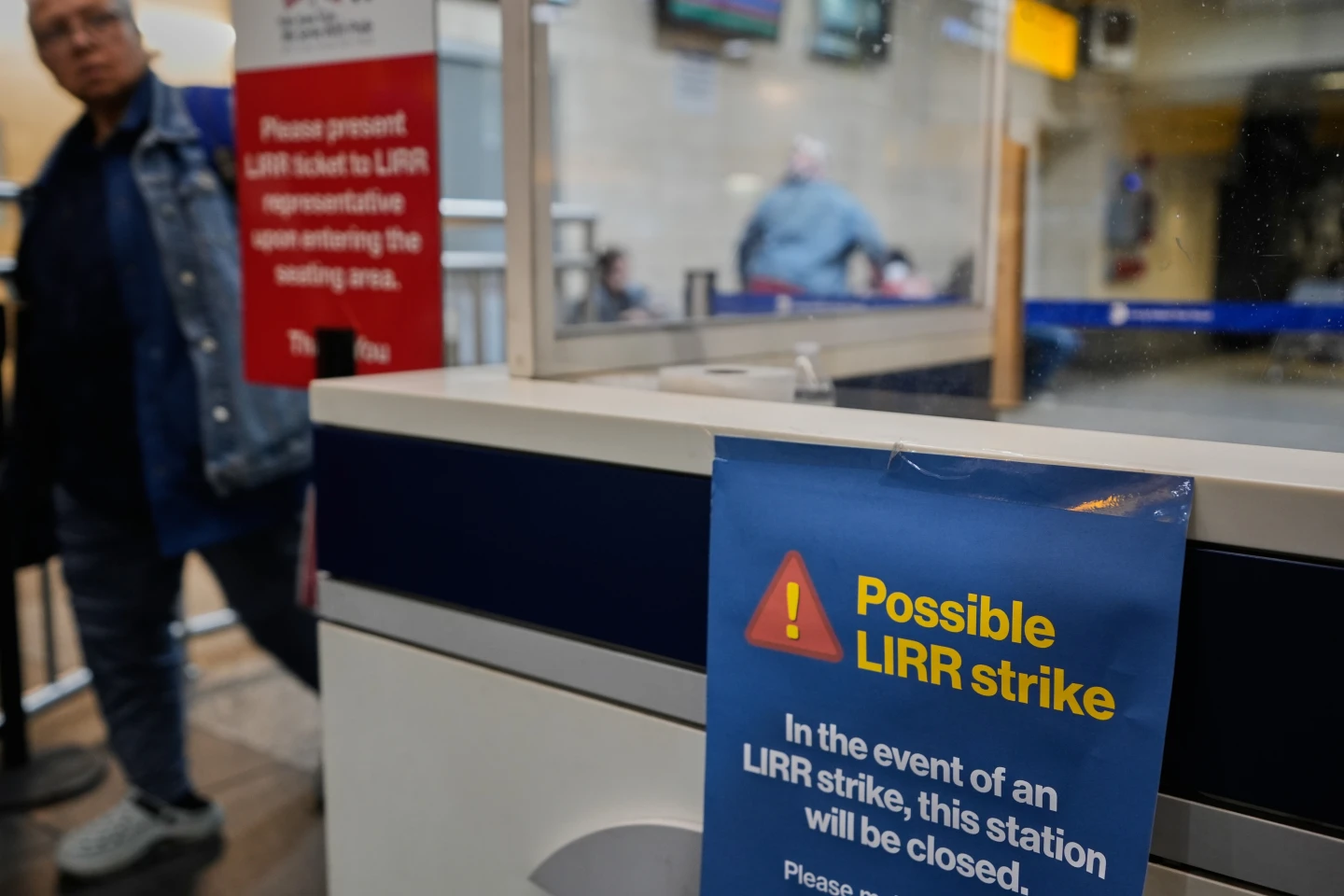
Workers representing about half of the Long Island Rail Road's staff have initiated a strike after unsuccessful contract negotiations with the Metropolitan Transportation Authority. The strike impacts around 250,000 daily commuters, forcing many to seek alternative transportation into New York City or work from home. Union representatives cited disagreements over wage increases and health care premiums as primary issues. The MTA has urged riders to work from home while providing limited shuttle services during peak hours. The strike is expected to significantly affect events like the NBA playoffs and MLB games this weekend.
NEW YORK (AP) — Workers on New York’s Long Island Rail Road are on strike, paralyzing the busiest commuter rail system in North America.
Labor unions representing about half the system’s workers announced the walkout after negotiations with the Metropolitan Transportation Authority (MTA) ended Friday without a new contract. The five unions, which represent about half the system’s 7,000 workers, including locomotive engineers, machinists, and signalmen, were not legally allowed to strike until 12:01 a.m. Saturday.
Kevin Sexton, National Vice President of the Brotherhood of Locomotive Engineers and Trainmen, stated, “We’re far apart at this point. We are truly sorry that we are in this situation.”
Janno Lieber, the MTA chairman, claimed the agency had met union demands regarding pay but implied that the unions were always poised to strike. The strike will compel roughly 250,000 daily riders to find alternative means of transportation into New York City from Long Island, potentially leading to heavier traffic and longer commutes.
Governor Kathy Hochul has urged LIRR riders to consider working from home during the walkout, while the MTA intends to provide free but limited shuttle bus services during peak hours for essential workers. In a statement, Hochul pointed to the union's leadership for the disruption, asserting, “Commuters are dealing with unnecessary dysfunction.”
The conflict primarily revolves around wage increases and health care premiums. The union initially demanded a 16% raise over four years to counter inflation, while the MTA expressed concerns that union proposals could lead to fare increases.
Susanne Alberto, a personal trainer from Long Island, noted the likelihood that the union may ultimately hold the advantage in negotiations, stating, “The MTA is going to cave, and they know that.”
LIRR workers have not gone on strike since 1994, and the last major transit strike in the area occurred last year when New Jersey Transit workers took action for three days. As commuters brace for the fallout from the strike, many are concerned about impacts on weekend sports events in Manhattan.