In brief
Rex Heuermann, the long‑sought Gilgo Beach serial killer, was sentenced by Judge Timothy Mazzei to three life terms and four additional sentences of 25 years to life. The hearing featured emotional impact statements from victims’ families, a stinging verdict, and a brief apology from Heuermann. The case, spanning murders from 1993 to 2010, determined a dramatic end to a decade‑long investigation that shocked Long Island.
Rex Heuermann, the infamous Gilgo Beach serial killer, was sentenced on Wednesday by Judge Timothy Mazzei to three consecutive life sentences for first‑degree murder. In addition, he received four consecutive sentences of 25 years to life on second‑degree murder charges, bringing his total term to a life behind bars with no possibility of parole.
The sentencing unfolded in a tense Riverhead courtroom, as families of eight victims—most of whom were sex workers whose bodies were found scattered along the remote beaches of Long Island—delivered heartfelt statements. Many recounted how the loss had left them with “lifelong devastation.” One sister declared, “You can look at me when I’m talking to you. It’s been 17 years since we last spoke.”
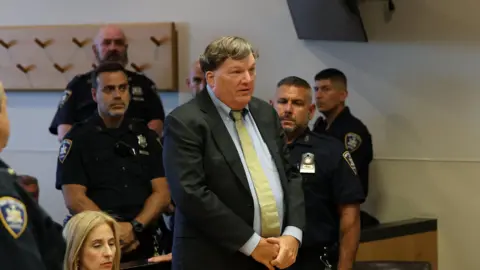
When Heuermann appeared, he wore a dark suit and offered a brief, at‑a‑glance “yes” to the judge’s question whether he felt a little remorse. Courtroom microphones recorded his nod before he was led into the corrections facility. Judge Mazzei’s reaction was raw: “Get him out of here,” he declared, while the gallery erupted in cheers.
Heuermann’s arrest came in 2023 after DNA from a pizza‑box linked him to the murders. After pleading not guilty in earlier trials, he ultimately confessed to the murders of Melissa Barthelemy (24), Megan Waterman (22), Amber Costello (27), Maureen Brainard‑Barnes (25), Jessica Taylor (20), Valerie Mack (24), Sandra Costilla (28) and Karen Vergata (34). The case spanned a 17‑year period, from 1993 to 2010, during which victims’ remains were first found in 2010 and only the next year yielded additional evidence.
Suffolk County District Attorney Ray Tierney praised the families, saying, “I want them to get their revenge by going on to have wonderful lives…now it’s time for them to heal.” His comments were echoed by Heuermann’s defense attorney, Michael Brown, who added, “From his standpoint, we saw the writing on the wall. He wanted to spare his family the ordeal of going to trial.”
The investigation that led to Heuermann’s conviction was itself a long story. Beginning in 2010, investigators struggled to connect four sets of remains found within a quarter‑mile of each other on Gilgo Beach. A challenged police task force was only created in 2022, under new leadership, bringing in federal resources and enabling a swift six‑week crack that identified Heuermann with the help of a distinctive Chevrolet avalanche and a crime‑scene photo from a pizza‑box DNA sample.
The case has left a lasting mark on the local community, with many victims continuing to speak out. The last victim’s daughter, Liliana Waterman, remembered being just four when her mother’s body was found and later reflecting on the grim realities she learned online in her youth. The impact statements were interspersed with the quiet sadness of those still mourning family members lost to the killer’s atrocities.
The sentencing marks a legal closure for the victims, but the memory of the deaths continues to haunt the area, as families and survivors process the aftermath of Heuermann’s crimes. Long Island’s grip on its own dark history remains tight as the city moves forward with acknowledgement and remembrance, as the court’s final words cut sharply darkly from the judge’s benchtop to the indignation of a long‑awaited sense of justice.