In brief
A catastrophic incident at LaGuardia Airport resulted in the collision of an Air Canada jet and a fire truck, with both pilots losing their lives and numerous injuries reported. The National Transportation Safety Board is investigating the failure of ground collision prevention systems and the sequence of events leading to this disaster. Key factors include the fire truck’s lack of a transponder and the challenges the Airborne Surveillance Detection System faced in predicting the collision. The incident raises important questions about airport safety protocols and response mechanisms.
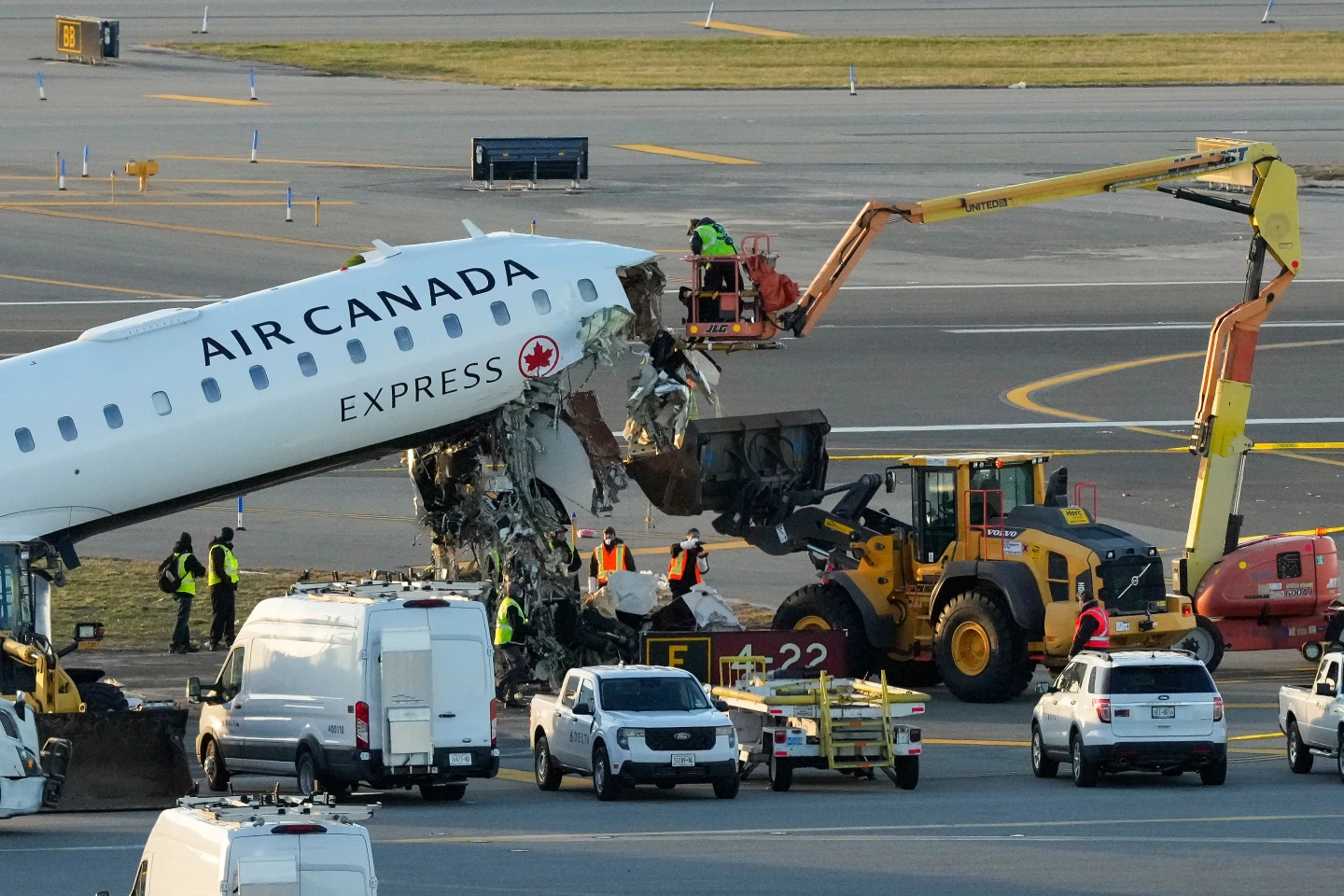
The systems at New York's LaGuardia Airport designed to prevent ground collisions failed during a tragic incident where an Air Canada jet collided with a fire truck that had just pulled onto the runway as the plane was landing.
Two pilots were killed and dozens were injured in this catastrophic event. The National Transportation Safety Board (NTSB) has commenced an investigation to ascertain the cause of the incident, which occurred shortly after one of the two air traffic controllers on duty cleared the fire truck to cross the runway just 12 seconds before the aircraft, carrying 76 passengers, landed. The controller's frantic attempts to stop the truck came too late to prevent the crash.
Experts predict that multiple factors contributed to the collision given the multiple layers of safety precautions built into the aviation system. Investigators are conducting interviews, examining wreckage, and testing systems involved in the incident. The damaged aircraft was moved to a secure hangar for further scrutiny on Wednesday.
Understanding the Current Safety Systems
LaGuardia Airport utilizes the Airport Surface Detection Systems known as ASDE-X, which integrates radar data and transponder information from aircraft and ground vehicles to monitor runway activity. This system is designed to sound alarms if a potential collision is detected.
Previous instances have demonstrated the efficacy of these systems; for example, last fall the NTSB credited the ASDE-X for averting a close call between a private jet and a Southwest Airlines plane in San Diego.
Historical accounts show that lack of advanced collision-prevention systems has been costly in aviation. The deadliest aviation accident in history occurred in 1977 when two Boeing 747s collided at the Tenerife airport, claiming 583 lives.
Initial findings from the investigation indicate that the ASDE system failed to alert controllers of the impending collision, partially due to difficulties in predicting the circumstances surrounding this event.
Concerns Raised about Fire Truck Monitoring
One issue raised by NTSB Chairwoman Jennifer Homendy was that the fire truck lacked a transponder, which could have provided more precise location data to assist controllers in monitoring. Some other major airports have equipped their emergency vehicles with such transponders.
Additional analysis noted that the number of emergency vehicles stationed on the taxiway for a reported medical situation complicated the predictive capabilities of the ASDE system. The fire truck had received clearance just 20 seconds before the crash, exacerbating the risk.
Despite these complexities, embedded runway lights should have signaled to the fire truck driver that the runway was unsafe for crossing. Witnesses suggest that potential distractions during an emergency may have influenced decisions made by both the fire truck driver and the controlling air traffic officer.
Ultimately, this incident serves as a stark reminder of the need for continuous improvements aimed at aviation safety protocols, and while safety systems are designed to reduce risk, no single technology or system can guarantee the elimination of accidents.