Under the harsh lights of an operating theatre in the Indian capital, Delhi, a woman lies motionless as surgeons prepare to remove her gallbladder.
She is under general anaesthesia: unconscious, insensate and rendered completely still by a blend of drugs that induce deep sleep, block memory, blunt pain and temporarily paralyse her muscles.
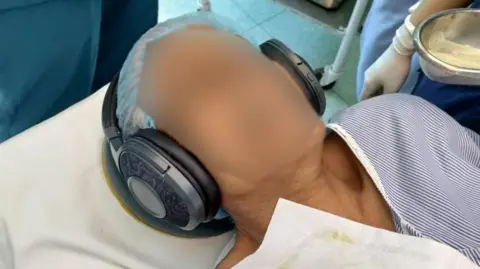
Yet, amid the hum of monitors and the steady rhythm of the surgical team, a gentle stream of flute music plays through the headphones placed over her ears.
Even as the drugs silence much of her brain, its auditory pathway remains partly active. When she wakes up, she will regain consciousness more quickly and clearly because she required lower doses of anaesthetic drugs such as propofol and opioid painkillers than patients who heard no music.
That, at least, is what a new peer-reviewed study from Delhi's Maulana Azad Medical College and Lok Nayak Hospital suggests. The research, published in the journal Music and Medicine, provides compelling evidence that music during general anaesthesia reduces drug requirements and enhances recovery.
The study investigated patients undergoing laparoscopic cholecystectomy, a brief operation to remove the gallbladder. Quick and clear-headed recovery is paramount for such procedures.
Dr. Farah Husain, a senior specialist in anaesthesia and certified music therapist, explains, Our aim is early discharge after surgery. Patients need to wake up clear-headed, alert and oriented, ideally pain-free. Better pain management curtails the stress response. Achieving this requires a careful blend of five or six drugs to maintain sleep, block pain, prevent memory of the surgery, and facilitate muscle relaxation.
During laparoscopic procedures, anaesthesiologists often add regional blocks—ultrasound-guided injections—that numb nerves in the abdominal wall.
Dr. Tanvi Goel, the primary investigator, notes that administering general anaesthesia with blocks is standard practice. Still, the body inherently reacts to surgery. Even under anaesthesia, heart rate spikes, hormones surge, and blood pressure rises. Managing this physiological response is critical for optimal surgical outcomes.
Beginning with intubation—which is regarded as the most stressful point of general anaesthesia—Dr. Sonia Wadhawan, director-professor of anaesthesia and intensive care at Maulana Azad Medical College, emphasizes that the body reacts to stressful stimuli even when unconscious.
The research team wanted to see if music could reduce the amount of propofol and fentanyl required, leading to less drug-related side effects and faster recovery.
The study began with a pilot involving eight patients, followed by a comprehensive 11-month trial of 56 adults aged approximately 20 to 45, divided into two groups receiving the same drug regimen: an anti-nausea, sedative, fentanyl, propofol, and muscle relaxant.
Patients wore noise-cancelling headphones; however, only one group listened to music, which they could select from calming instrumental options—soft flute or piano. The unconscious mind still has areas that remain active. Even if music isn't remembered, implicit awareness can lead to positive effects, shares Dr. Husain.
The findings underscore the benefit of music during anaesthesia.
Participants exposed to music utilized lower doses of propofol and fentanyl, enjoyed smoother recoveries, and demonstrated better control of stress levels and blood pressure during surgery. This indicates that music can positively influence patients' internal states even when they are unconscious.
Observing that the brain remains responsive to auditory information despite anaesthesia suggests potential therapeutic benefits of music in surgical contexts.
Dr. Husain remarks, We're only beginning to understand how the unconscious mind responds to non-pharmacological interventions like music, which helps humanize the operating room.
If such a simple treatment can significantly reduce drug use and improve recovery—albeit modestly—it could transform hospital approaches to surgical wellness.
As the research team embarks on further studies examining music's impact on sedation, early results hint at a promising new direction in enhancing surgical experiences.