In brief
The Rafah crossing, crucial for the movement of people between Gaza and Egypt, has officially reopened, allowing only a small number of patients to float across. The reopening comes after significant delays tied to security arrangements and the past retrieval of an Israeli hostage's remains. While the renewal of access brings hope to many Palestinians seeking medical aid, frustrations remain over the limited number of individuals allowed to pass and the ongoing restrictions on goods.
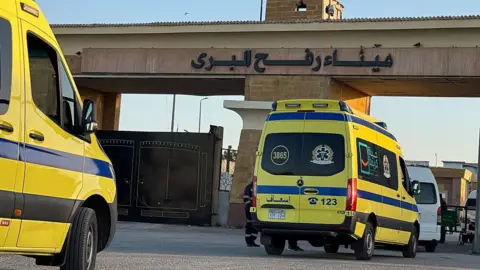
Only a small number of sick and wounded Palestinians from Gaza were able to travel to Egypt on Monday following the reopening of the Rafah border crossing, which had been largely closed since Israeli forces captured the Gazan side in May 2024.
The reopening was slated to coincide with an initial phase of U.S. President Donald Trump's ceasefire plan between Israel and Hamas, which commenced in October. Delays in the crossing's reopening were influenced by Israeli conditions regarding the return of the last deceased Israeli hostage's remains, a situation resolved last week.
The limited access has been welcomed by some Palestinians as a crucial lifeline, although there is visible frustration over the negligible number of allowed crossings and the prohibitions on goods. Local hospitals and the World Health Organization (WHO) estimate that around 20,000 individuals in Gaza are currently awaiting the opportunity to exit and receive medical treatment.
Reports indicate that only 50 patients, along with one or two relatives, will be permitted to leave each day, while 50 individuals who had left Gaza during the conflict are allowed to return. On the day of reopening, however, only five patients and their companions crossed over while twelve were permitted to return to Gaza. Thirteen others were detained on the Egyptian side of the crossing due to security issues.
The reopening was overseen by supervisors from the European Union Border Assistance Mission along with local Palestinian staff, but strict security checks are conducted remotely by Israel.
An Israeli security official confirmed that the crossing is open for the movement of residents in both directions. The operational timeline has been met with mixed responses as many still await essential treatments that could address urgent health concerns exacerbated by the ongoing wartime conditions.
Local tales arise, such as that of Sabrine al-Da'ma who hopes to travel abroad to donate a kidney to her daughter Rawa, who suffers from kidney disease exacerbated during the war. Others express similar wishes to travel for education and healthcare, highlighting the long-lasting impact of the conflict on personal lives and aspirations.