In brief
In an alarming incident that unfolded just a few feet off the coast of Tobago, Peter Smith recounts the moments leading to his encounter with a bull shark, revealing the terrifying details of the attack that left him severely injured but with a profound appreciation for life. Despite suffering multiple lacerations and losing a significant amount of blood, Smith reflects on the experience without fear of sharks, praising the efforts of those who helped him during the crisis.
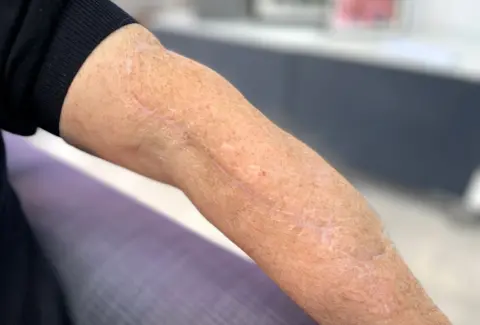
It was the last hour of the last day of Peter Smith's holiday in Tobago when he decided to take a dip in the sea. The conditions were perfect for a swim, the retired IT director recalls. I dived into the waves, swam out no more than 20 feet (6m), and stood waist-deep in the water. He and his wife Joanna were enjoying their vacation with friends, oblivious to any risk of shark attacks, which are mostly unheard of on the tiny Caribbean island.Suddenly, he felt a heavy object hit his leg. Looking down, he realized it was a bull shark, reaching lengths of about 10 feet (3m). He had been bitten by one of the most dangerous sharks known for hunting in shallow waters.Peter recounted his terrifying experience in an exclusive interview: I start punching the shark. To be honest I don't know what I was trying to do, but I was hitting it. I can honestly say I've never hit anything as hard as I hit that shark. Following the initial attack on his leg, the shark escalated the assault, inflicting additional wounds on his arm and stomach, leading to a rapid loss of blood.With the shark momentarily releasing its grip, Peter was rescued from the water by friends who raised the alarm. Once on the beach, Joanna sprinted to his side, witnessing the severity of his injuries. I could see bones, it was just awful, she said, reflecting on the horror of the situation as Peter was whisked away to the only hospital on Tobago.With deep lacerations and significant trauma, Peter was later transported to the Jackson Memorial Hospital in Miami, where he underwent multiple surgeries. Interestingly, doctors revealed a cruel irony involving his recovery – a special membrane used for skin grafts came from a shark.Despite the ordeal and lasting physical challenges, Peter Smith has chosen not to live in fear. The people in Tobago were really good to me. They depend on tourism for their livelihood. I'd go back. What's the point in surviving a shark attack if you're going to live the rest of your life in fear? He continues to share his story to emphasize compassion over fear, and gratitude to those who stood by him during his darkest moment.