In brief
The Rhine River has dipped below all previous records, reaching the lowest depth since measuring began at Cologne and the German-Netherlands border. Heatwaves across Europe have turned rivers into bottlenecks, forcing shipping delays and raising transport costs. Neighboring rivers such as the Danube and Po are also hit hard, triggering power plant shutdowns and water‑supply warnings. Climate experts warn that higher temperatures are amplifying evaporation, making these drought conditions more likely and less predictable.
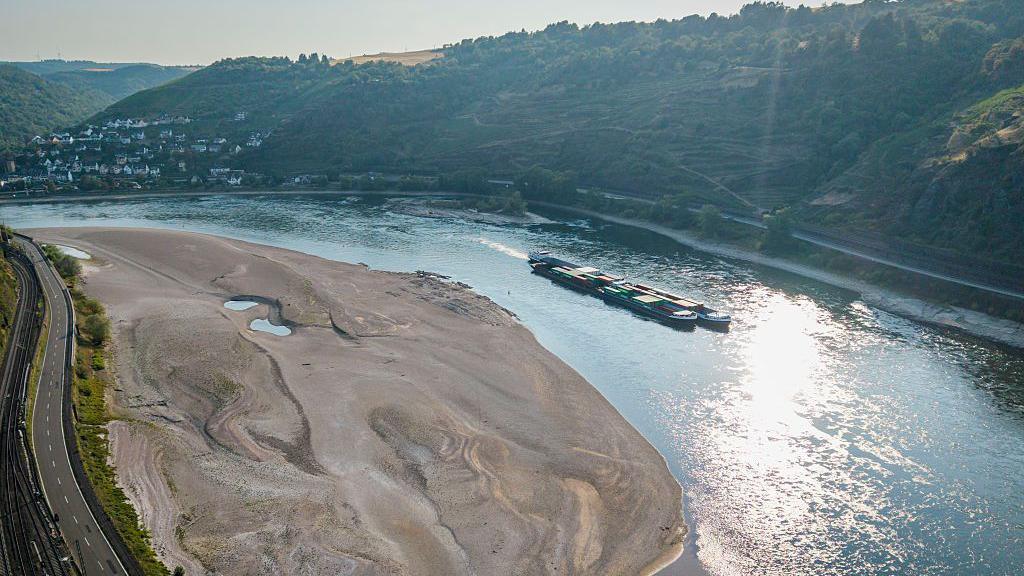
The Rhine River has fallen to record low levels in several locations in Germany and the Netherlands, a stark indicator of the growing drought crisis across Europe.
Measurements taken last week in Cologne, western Germany, and in Lobith, right at the German‑Netherlands border, were lower than any recorded level since the river was first monitored.
Other major European rivers, including the Danube and Italy’s Po, have also struggled with historically low flows, putting shipping, industry, agriculture and power generation at risk.
The EU’s Drought Observatories report that drought conditions remain critical across much of the continent, with central‑western Europe experiencing the most severe impacts in mid‑July.
Germany’s river monitoring agency, NIWIS, noted that 44% of Rhine gauges and 78% of Danube gauges recorded extremely low water levels by the end of July.
The Rhine starts in the Swiss Alps and empties into the North Sea, making its water level crucial for one of Europe’s busiest inland waterways. Low depths have sparked concerns about economic fallout, as shipping constraints could require cargo to be split across more vessels or be carried with lighter loads.
Marco Wolters of the Rhine Waterways and Shipping Authority said that while total shipping suspension remains unlikely, precautions will need to be taken to protect vessels and cargoes.
One commodity trader told Reuters that “loads may become too light to be worthwhile or ship owners may fear damage to their vessels,” indicating potential cost spikes.
In the Danube, the record low levels last week threatened Hungary’s sole nuclear plant, causing it to operate at reduced capacity as flood‑water shortages risked shutting it down entirely. Power supply disruptions extended into Serbia and Romania, where coal‑fired plants cut output due to cooling‑water shortages.
Romanian car plants, operated by Dacia and Ford, have halted production for over two weeks to reduce electricity usage amid supply constraints.
Italy’s long‑running Po River fell to a historic low near Cremona in late July, prompting authorities to raise drought alerts and warn of potential drinking-water disruptions. Saltwater intrusion at the river’s mouth added ecological strain, and farmers reported severe irrigation problems.
A recent study by the World Weather Attribution group found no clear long‑term trend toward lower rainfall across Europe, but it confirmed that human‑induced climate warming is increasing evaporation, making droughts more likely.
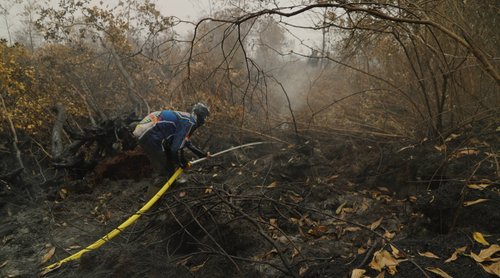
These droughts have also stimulated higher wildfire activity, according to the EU’s Copernicus climate service, reinforcing the link between extreme temperatures and broader environmental risks.