In brief
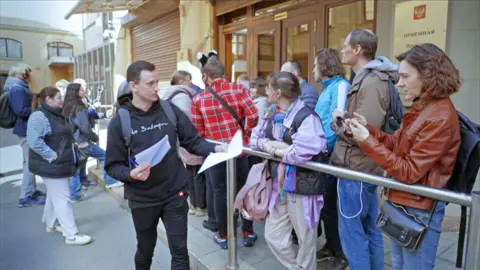
In a striking display of resistance, Russians are queuing outside the presidential administration office in Moscow to submit petitions against the government's tightening grip on internet access. This clampdown has severely disrupted communication, prompting citizens like Yulia, a local caterer, to express their fears and frustrations as they adapt to an increasingly restricted digital landscape.
In Moscow, a group of determined citizens has gathered outside the presidential administration offices, voicing their grievances against the escalating restrictions imposed by the Russian government on internet communications. These individuals, led by a local businesswoman named Yulia, are petitioning President Vladimir Putin to end what they describe as an oppressive crackdown on digital freedoms.
Recent moves by Russian authorities have made it increasingly difficult for citizens to access global messaging platforms, leading to widespread disruptions and even shutdowns of mobile internet services. While petitioning the president may be lawful, in an authoritarian regime like Russia's, doing so carries significant risks. As Yulia stands in line, she admits, I’m shaking, highlighting the fear that permeates such acts of dissent.
In defense of its actions, the Kremlin cites the need for security, particularly regarding alleged threats from Ukraine. However, the consequences of these measures are felt widely by everyday Russians, many of whom depend on the internet for their livelihoods, as Yulia explains the impact on her catering business due to inconsistent online access.
The situation has sparked a broader conversation about the government's role in online communication, with many citizens expressing skepticism about a new state-backed messaging service called MAX, fearing it might serve as a tool for surveillance rather than a reliable means of communication.
Despite Putin's reassurances that measures will eventually ease, the increasing restrictions have led to a growing sentiment of public discontent. Figures like political analyst Andrei Kolesnikov warn of simmering frustration, suggesting that the current landscape could lead to significant unrest in the future. As citizens adapt to circumvent the limitations, the struggle for freedom of expression in digital spaces continues in Russia.