In brief
Leipzig/Halle Airport was rocked when a small quadcopter drone loaded with explosives was discovered at a runway, forcing a temporary lockdown. German officials warn of a new level of danger that may involve foreign powers, with Russia a prime suspect. While no direct links to Russia have yet emerged, evidence from a 2024 plot involving a similar package points to Russian‑backed proxies across Europe. Ukrainian warehouses and drones were found in the area, and investigators are exploring whether the device was intended as a warning rather than a mass‑kill weapon. International actors, including NATO and Antonov Airlines, have monitored the incident closely, stressing the potential for a surge in hybrid attacks amid ongoing Ukraine conflict.
German Airport Drone Bomb: Could Russia Be Behind It?
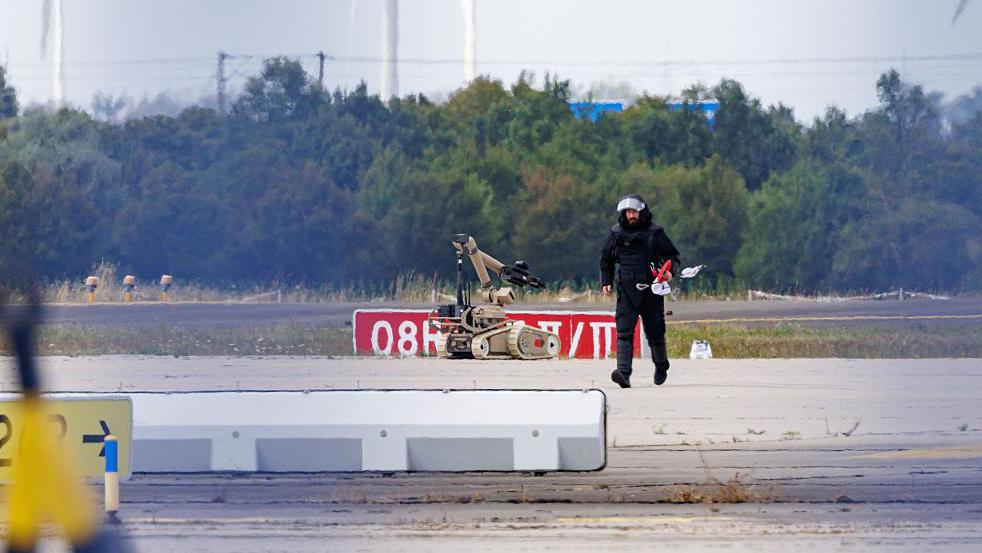
In the early hours of Tuesday, a quadcopter drone lodged on a runway at Leipzig/Halle Airport evoked a dramatic safety response, forcing the closure of aircraft movement while engineers deployed a special robot to disarm the device.
The tiny aircraft, spotted hovering near a block of Ukrainian Antonov cargo planes emblazoned with the national flag, was loaded with an explosive that investigators suspect was Semtex, a plastic explosive containing RDX. The exact size of the payload remains undetermined, but experts estimate that the blast could have merely dented the aircraft, pointing to a terror device rather than a weapon designed for mass casualties.
German Interior Minister thanked the security teams and warned that the incident could signal a “new level of danger” related to foreign powers. While Russia has officially denied involvement, the pattern of previous attacks, including a 2024 plot that saw RDX-laced packages ignite in Germany, Poland and the UK, suggest a plausible link to Russian‑backed proxies operating in the region.
Investigators interviewed a Ukrainian suspect named Vladyslav D., who reportedly handled packages of headphones, corn cans and drone parts that may have been smuggled across borders and hidden in plain sight within food containers. He admits to having been paid in cryptocurrency for the collection of these items, hinting at a systematic operation orchestrated by Russian intelligence agencies.
Experts such as Professor Jackie Akhavan from Cranfield University explain that the drone’s casing could have caused only a superficial blast, whereas the primary motive appears to be intimidation. “Sowing fear throughout Europe’s largest airports would send a clear message about the reach of Russia’s disruptive tactics,” the professor noting.
NATO officials acknowledged the incident and called for caution given the heightened threat environment, while Antonov Airlines, which ferries planes for NATO missions, clarified that the Ukrainian aircraft in the vicinity were not targeted for the drone.
As the investigation continues, international observers anticipate a rise in similar hybrid attacks, warning that the Ukrainian war dynamics may have shifted the balance of power and allowed Russia to intensify sabotage operations.