In brief
Residents of Gaza continue to grapple with economic hardships nearly six months after a ceasefire was declared. Rising prices and a lack of supplies, linked to international conflicts, raise doubts about future peace efforts by the U.S.-led Board of Peace. Hamas's potential rejection of disarmament proposals adds to concerns surrounding stability in the region.
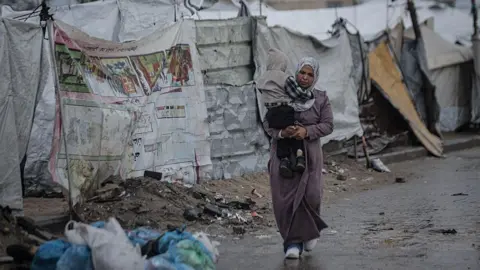
Nearly six months after a fragile ceasefire came into force in Gaza, Palestinians in this war-torn territory are still struggling. In the markets, there are again shortages of some goods and rising prices – with merchants saying supplies brought in from Israel have been disrupted by the new war in the region.
What does the war between Iran and Israel have to do with us? Prices have doubled here. Goods aren't coming in like before, says a shopper, Hassan Faqawi, despairingly. In this situation, the whole world is focused on Iran, America and Israel, and Gaza is forgotten.
While world attention has turned to the Iran war, there is increasing uncertainty about what happens in Gaza at a crucial stage in President Trump's 20-point peace plan, which halted the fighting in October last year.
In the past week at the UN Security Council, the High Representative for Gaza on the US-led Board of Peace, Nickolay Mladenov, laid out a detailed plan for Palestinian armed groups to decommission their weapons - linking compliance to the start of reconstruction.
But a Palestinian official familiar with Hamas affairs told the BBC it was likely that Hamas, whose October 2023 attack on Israel triggered the war, would reject the proposals. That raises the prospect of a return to a full-force military offensive with Israel's prime minister demanding that Hamas disarms either the easy way or the hard way.\
Despite a ceasefire, Israeli air strikes in Gaza have continued, further complicating recovery. Palestinians report ongoing frustrations with prices and essential services as aid remains limited; negotiations for reconstruction have led to minimal advancements.
Meanwhile, Hamas continues to project authority, imposing taxes and reinstating security measures. Gazans express a longing for effective governance, lamenting that the group is the only power in control post-ceasefire.
The situation remains fluid, with international focus divided, prompting fears that peace processes may stall while local needs grow dire.