In brief
The grieving families of at least ten scientists who have died or disappeared in connection with sensitive research are confronting wild speculations and conspiracy theories that have surfaced following these tragedies. Notably, the widow of astronomer Carl Grillmair criticized the online theories, finding them both offensive and baseless. While federal investigations are underway, the families seek to honor their loved ones' memories instead of fueling conspiracy narratives.
The disappearances and deaths of at least 10 people tied to sensitive US research have drawn scrutiny from online sleuths and now federal investigators. But for grieving relatives, all the wild speculation is 'disgusting.'
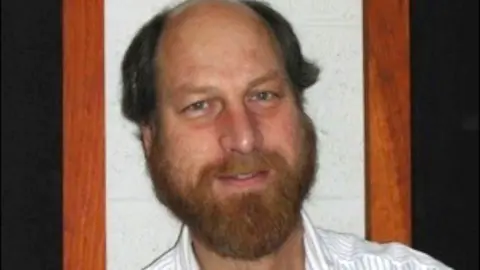
Carl Grillmair 'would laugh' at the conspiracy theories about his killing, says his widow.
I think it's absolute nonsense, says Louise Grillmair. I mean, there's the facts, and they're out there.
Her 67-year-old husband was gunned down at their Llano, California, home in February.
Grillmair's alleged killer, a 29-year-old local man, Freddy Snyder, has been charged with murder and burglary and is due in court next week for his arraignment.
Despite the arrest, Grillmair figures prominently in conspiracy theories about the deaths and disappearances of about 10 people with connections to top-secret labs or scientific work.
They are often lumped together as 'missing scientists', but the list includes an administrative assistant, an Air Force general, an engineer and a custodian, and spans several fields, from researching exoplanets to pharmaceuticals.
Online sleuths have suggested the cases may be connected, even prompting the US House of Representatives Oversight Committee and the FBI to announce investigations - despite other established explanations and family members' attempts to quell the hysteria.
Grillmair's wife believes her husband was targeted in a misguided revenge plot. Months before the killing, a man had 'wandered on [their property] with a rifle', claiming to be coyote hunting. She says her husband directed the suspect to a nearby ridge.
The man had also been causing mischief at other homes nearby, she says, and one resident called 911. Grillmair hadn't placed the call, but his wife believes the man blamed her husband for it as his behaviour was 'escalating'.
The man came back with a baseball bat two weeks before Grillmair was killed, but left without causing anymore trouble that day, she said.
Then he returned on 16 February and allegedly fatally shot Grillmair, a renowned astronomer at the California Institute of Technology's IPAC science and data centre for astronomy and planetary science.
We believe [he] came for revenge, thinking Carl was the one that called 911, says Louise.
Sceptics have poured cold water on the wild theories surrounding the deaths. 'The US Top Secret-cleared aerospace and nuclear workforce is ~700,000 people,' science writer, investigator and pseudoscience debunker Mick West wrote on 16 April on his Substack. 'Ordinary mortality over 22 months predicts ~4,000 deaths, ~70 homicides, and ~180 suicides. The list has 10 … The deaths are real. The families' grief is real. The pattern is not.'
Louise Grillmair, similarly, says that - while her husband 'would laugh' at speculation that the deaths might be connected - he would also 'probably talk statistically' to squelch conspiracies.
The wife of retired Air Force General William Neil McCasland - the highest-ranking and highest-profile of the missing - took to Facebook the week after his 27 February disappearance from their New Mexico home to 'dispel some of the misinformation circulating'.
Even in her 911 call, three hours after she returned home from a doctor's appointment to find her husband gone, Susan McCasland Wilkerson said she had 'some indication that he must have planned not to be found'.
She told the dispatcher that he'd turned off his phone and left it behind, but took his gun, though he 'doesn't generally' carry a weapon.
Eight months before McCasland's disappearance, also in New Mexico but 135 miles (220km) away in Taos, an administrative assistant at Los Alamos National Laboratory vanished. The family of Melissa Casias also addressed the case on Facebook, again indicating that their loved one left deliberately. Their comments did little to dampen theorists' obsession with her case.
Other cases, like Grillmair's, had cut-and-dried explanations. MIT physicist Nuno Loureiro was murdered by a former classmate who was also arrested for additional killings at Brown University - and the suspect confessed on video recordings later discovered by authorities.
Louise Grillmair says the explanations appeared to be no deterrent for conspiracy theorists - she's even 'been contacted by many of them' asking her opinion. 'I said, 'Well, I can do better than an opinion,' she says. 'I have the facts.'
The speculation, she says, is 'denigrating to their memories'.
For Louise Grillmair, who met her husband in an astrophysics class, she would prefer that the world know not just about his groundbreaking scientific work, but also his kind and generous character. 'He helped everyone that needed help,' she says. 'For example, he got into two quite serious car accidents… and he didn't believe in suing.'