In brief
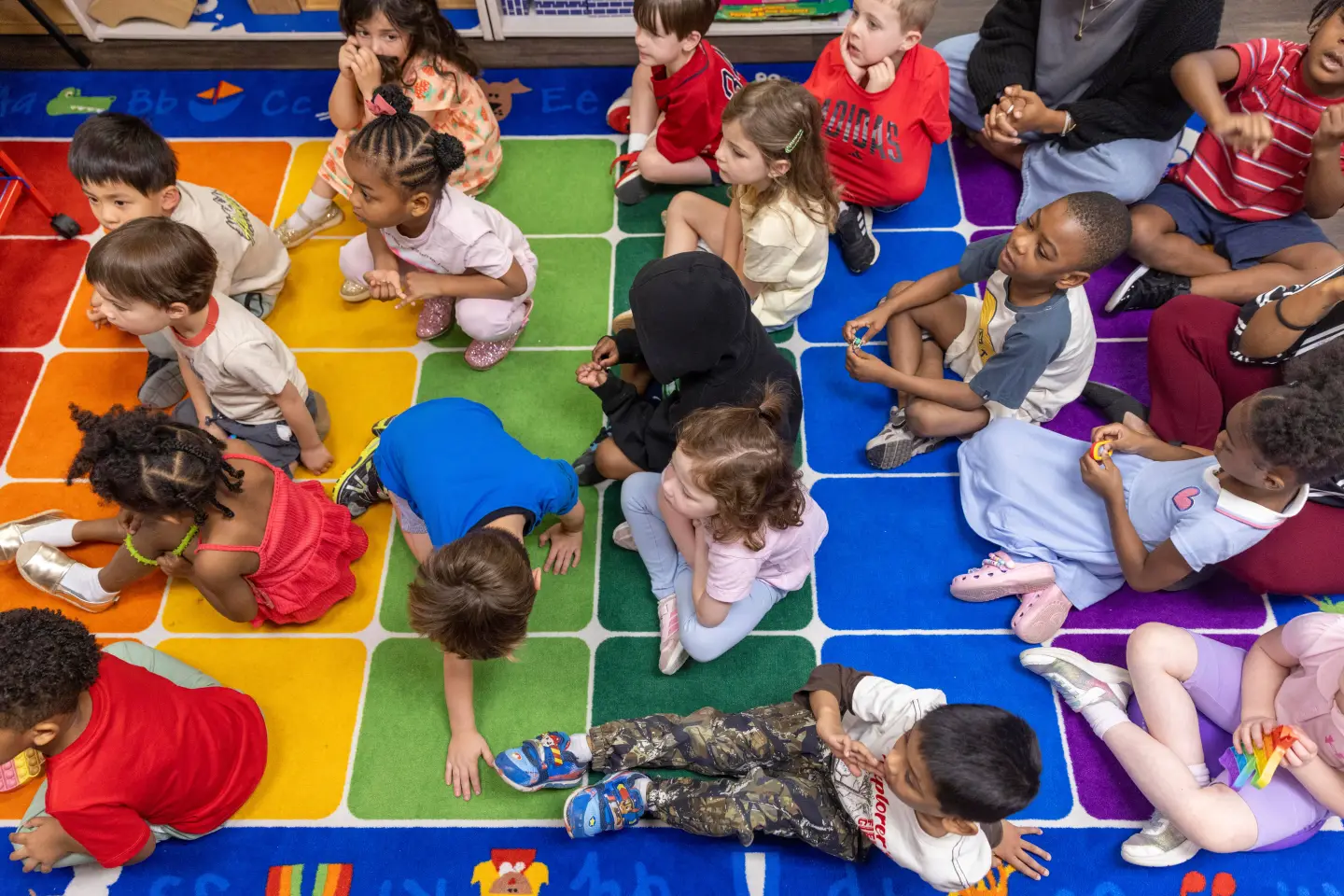
In the past school year, state-funded preschool enrollment in the U.S. reached a record 1.8 million children. This represents 37% of 4-year-olds, as states invest in universal access, aided by a $14.4 billion spending boost. However, while enrollment has increased, access remains uneven across states with varying quality standards. California is leading with substantial enrollment gains through its 'transitional kindergarten' program, despite facing challenges in meeting quality benchmarks. National experts emphasize that high-quality preschool education is crucial for future success.
WASHINGTON (AP) — The number of 4-year-olds attending state-funded preschools reached record highs last school year, driven by states embracing universal access and an unprecedented $14.4 billion in spending.
State-funded preschool enrollment in the U.S. rose to 1.8 million kids, reaching 37% of 4-year-olds and approximately 10% of 3-year-olds, according to an annual report published Wednesday by the National Institute of Early Education Research. Although states added 44,000 students to their preschool enrollment, the report's authors noted that the growth was modest compared to the previous year and that access remains uneven across states.
If providing high-quality preschool education to all 3- and 4-year-olds were a race, some states are nearing the finish line, others have stumbled and fallen behind, and a few have yet to leave the starting line, the report stated. Popular participation indicates a strong push towards preschool improvements nationally, especially in California, where the state made all 4-year-olds eligible for its 'transitional kindergarten' program.
While the national institute outlines essential quality benchmarks for preschool related to teacher training, class size, and curriculum, California notably met just two last year. Some private preschool owners have expressed concerns about a loss of business due to the influx of children into public preschool programs.
Jessica Sawko of Children Now noted, Universal TK ... is a real win, but it’s also just the start of the work and not the end of it, highlighting California's plan to meet key benchmarks, including lowering the student-teacher ratio to 10-to-1 and requiring lead teachers to have early education training. States face trade-offs as they scale their programs rapidly or operate on limited funding.
Evidence demonstrating the long-term benefits of high-quality preschool indicates that it helps children in skill acquisition and prepares them for kindergarten success and future employment opportunities.
In many instances across the U.S., families still report a struggle to find affordable preschool, leading to concerns around equity in access. Notably, Hawaii is one of six states meeting all of the institute's benchmarks, though it serves only 10% of 4-year-olds.