In brief
The article delves into the nuances of patriotic education in Russia, highlighted in the documentary 'Mr Nobody Against Putin'. Through personal stories and expert insights, it discusses the methods used to instill nationalism in children and the resulting parental concerns over their children's exposure to propaganda.
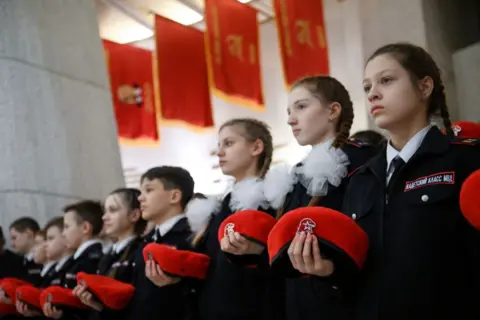
When her seven-year-old daughter was told to learn a poem about Russia's 'glorious army' for a school event, Nina from Moscow thought it was too much. Like many parents, she has struggled to shield her child from an increasing number of 'patriotic' activities that have become common in Russian schools. This has recently become a global topic of discussion, especially with the release of the Oscar-winning documentary 'Mr Nobody Against Putin'. The documentary features footage from a primary school events coordinator in Karabash, a small provincial town. Surprisingly, Nina's daughter enjoys participating in the patriotic programs, which raises concerns for her mother about potential social isolation if she opposes school-sanctioned activities. The film captures the evolution of the school curriculum under the pressures of the ongoing war in Ukraine, showcasing compulsory lessons on government-sanctioned Russian values and history. Educational authorities have intensified their efforts, introducing flag-raising ceremonies and revisiting history books to paint a specific narrative of the 'special military operation'. While some students express boredom during 'patriotic' lessons, others, like Maksim, find excitement in learning military strategies. Parents like Marina, though opposed to the war, are cautious about discussing their views to avoid attracting negative attention. Psychotherapist Anastasia Rubtsova highlights the risk of children internalizing positive messages about war from authority figures. Studies suggest that childhood and adolescence are crucial periods for shaping attitudes, often influenced by the familial environment versus institutional teachings. In a system where alternative narratives are suppressed, parents are left navigating a complicated landscape. The documentary invites urgent discussions on how far propaganda can stretch and what measures parents, educators, and psychologists advise amidst rising nationalism. The variations in adherence to governmental guidelines across schools illustrate the ongoing struggle against pervasive ideologies in Russia's education system.