In brief
Rev. Sarah Trone Garriott, along with other clergy members running for Congress in Iowa as Democrats, are redefining the relationship between faith and politics. Their campaigns focus on issues such as healthcare and welcoming communities. This shift comes as more religious leaders seek to engage with faith-based policies, addressing the discomfort within the Democratic Party regarding discussions of faith. Notable figures like James Talarico also resonate with younger voters, sparking interest in progressive Christianity's role in political dialogue.
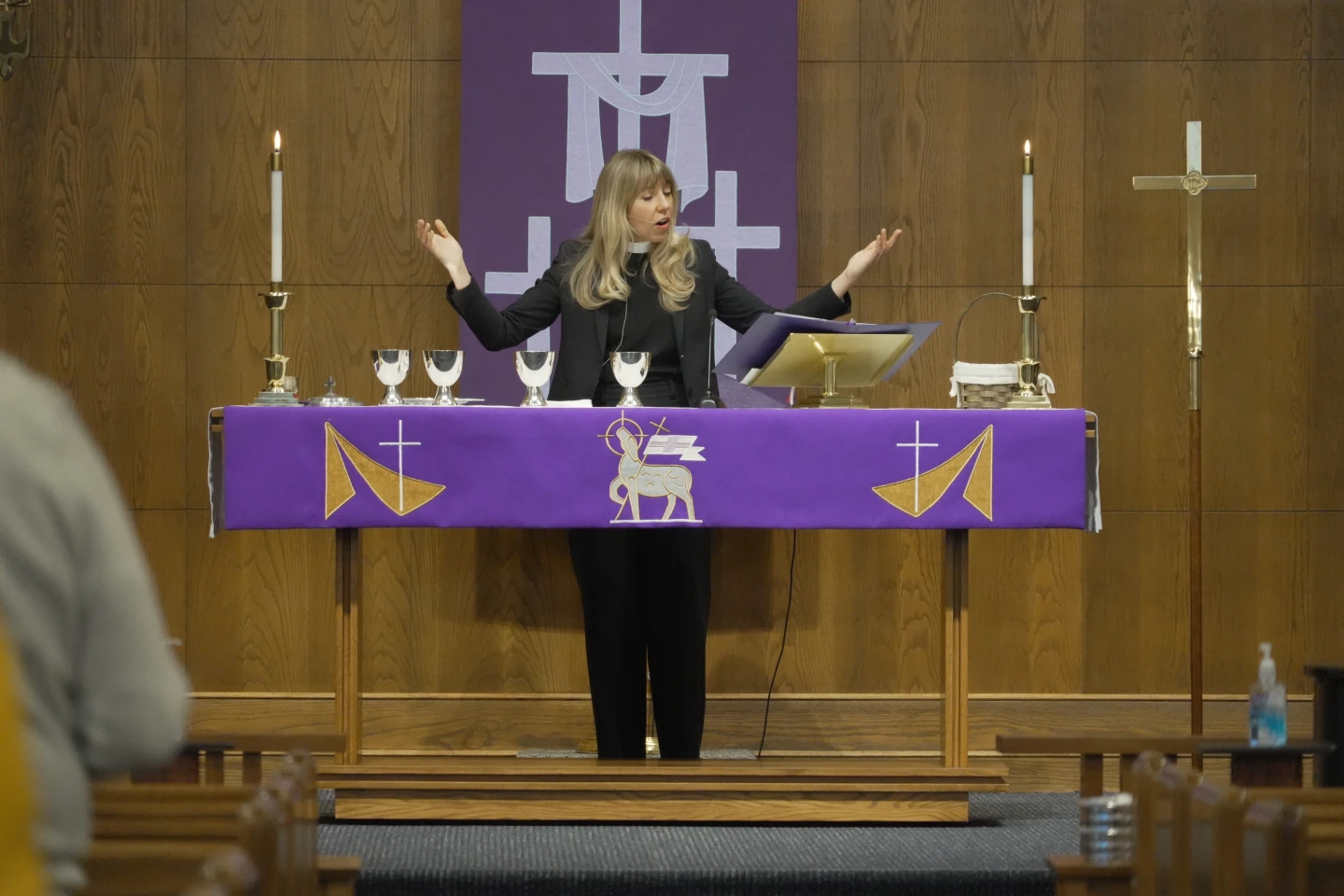
DES MOINES, Iowa (AP) — In both formal and informal settings, the Rev. Sarah Trone Garriott engages comfortably with discussions on religion and politics. Last Sunday, she delivered an emotional sermon at Grace Lutheran Church, urging congregants to embrace strangers as Jesus once did. Just a day prior, she was seen campaigning in rural Iowa against cuts to Medicaid, emphasizing their adverse effects on healthcare accessibility.
Trone Garriott, a Lutheran pastor and current state senator, is one of three clergy members in Iowa vying for Congress as Democrats. This trend mirrors a larger movement where more religious figures previously aligned with the Republicans are now stepping forward as progressive candidates. Similar to Rev. Trone Garriott, figures like James Talarico, a Presbyterian seminarian, have gained national recognition during these midterms.
Melissa Deckman, CEO of the Public Religion Research Institute, points out that a shift is occurring, as individuals within the Democratic Party are beginning to openly integrate their faith into political discourse, contrasting the historically conservative framing of Christianity.
For many Democrats, the upcoming task is to articulate their faith authentically, reflecting the diverse religious landscape that differs from the more homogenous religious support seen in the Republican Party. Trone Garriott, who is adept at connecting with both Catholic and Muslim communities, notes that many within her party shy away from discussing religious matters meaningfully, often falling into generalized narratives about faith.
Trone Garriott's perspective is that the Democratic Party is slowly recognizing the importance of acknowledging and addressing religious differences instead of glossing over them. She asserts that a lack of engagement left space for the religious right to dominate the conversation.
Talarico, known for his attention-grabbing appearances, urges a more open dialogue about faith that isn’t constrained by restrictive interpretations of religion. As he explained, true engagement demands genuine discourse rather than mere symbols, suggesting that faith can thrive in a public sphere without coerced displays.
The support among white evangelicals for candidates like Donald Trump emphasizes the need for more nuanced approaches from liberals, who often fail to resonate with certain religious demographics. As Kentucky Gov. Andy Beshear pointed out, transparency about personal motivations tied to faith is essential for believers to trust political actors.
The involvement of clergy in politics isn't unprecedented, especially among black leaders. However, white clergy like Trone Garriott and ministers including Twedt-Ball are changing the dynamics within Iowa and beyond, responding to a perceived failure to express faith-related values adequately among political leaders.
Rev. Huong from California is also making strides by challenging incumbent mayor Karen Bass, illustrating the growing intersection between faith and progressive politics. She aims to reshape the narrative around Christianity, presenting it as a force for liberation rather than oppression.
As the political landscape continues shifting, new leaders are emerging. Figures like Zohran Mamdani of New York are showing how faith can inspire change, arguing that despite a decline in organized religion, there remains a crucial link between belief, trust, and political advocacy.