In brief
China’s finance ministry announced a 360 billion‑yuan ($53.6 bn) cash injection into eight state‑owned banks and insurers to shore up the country’s financial system. The package covers major lenders such as the Industrial and Commercial Bank of China and insurers like China Export & Credit Insurance Corporation, and is designed to improve risk resilience and credit provision to the real economy. Beijing’s move comes amid a range of challenges including a shrinking workforce, a prolonged property slump, trade and technology tensions with the U.S., and rising oil prices driven by the Iran war. Official growth data shows a slowdown, with Q2 GDP up 4.3% and the government's growth target cut to 4.5‑5% – the lowest since 1991.
China is pumping tens of billions of dollars into eight state‑owned banks and insurance companies to help shore up the country’s financial system and boost its slowing economy.
The cash injection, led by China's finance ministry, totals 360 billion yuan ($53.6 bn; £39.7 bn), Xinhua reports. This move will strengthen banks' operating and risk resilience, allowing them to serve the real economy better.
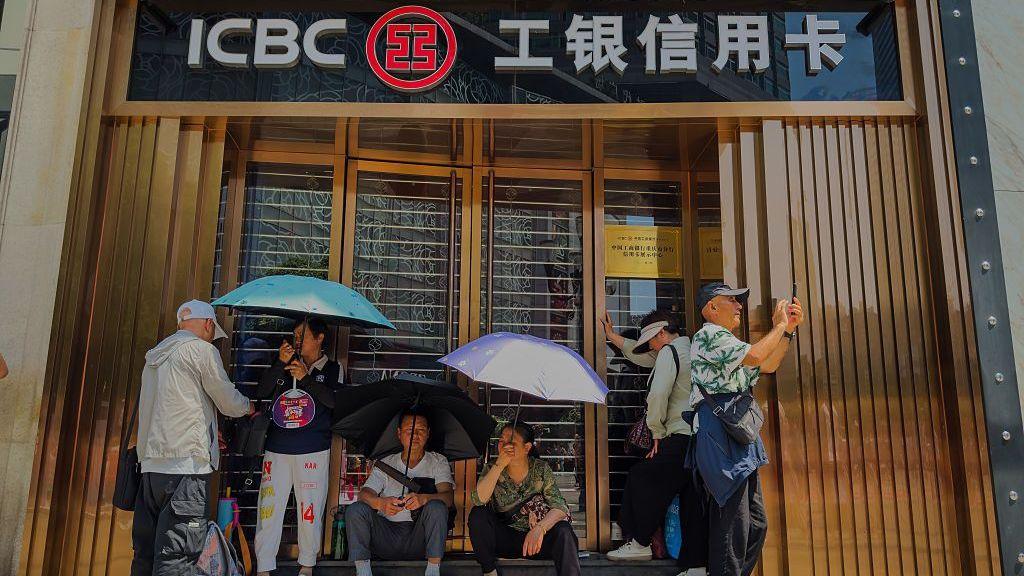
The package covers three major banks – Industrial and Commercial Bank of China, Agricultural Bank of China and China Construction Bank – and five insurers, including China Export & Credit Insurance Corporation. Global Times says the injection should provide more resources for credit to the real economy and bolster firms' ability to withstand shocks amid global uncertainty.
President Xi sees financial stability as key to national security. The announcement comes amid challenges: a shrinking workforce, a prolonged property market slump, trade and technology rivalry with the U.S., and rising oil prices from the Iran war.
China's official GDP grew 4.3% in Q2, below Beijing’s 4.5‑5% target, after a 5% rise in Q1. In March the growth target was cut to 4.5‑5% – the lowest since 1991 – giving Beijing room to acknowledge pre‑existing economic weakness.
China's economic growth slowed sharply between April and June.