Prime Minister Mark Carney's new approach to Canada's foreign policy can perhaps be distilled in one line: We take the world as it is, not as we wish it to be.
That was his response when asked about the deal struck with China on Friday, despite concerns over its human rights record and nearly a year after he called China the biggest security threat facing Canada.
The deal will see Canada ease tariffs on Chinese electric vehicles that it imposed in tandem with the US in 2024. In exchange, China will lower retaliatory tariffs on key Canadian agricultural products.
Experts told the BBC the move represents a significant shift in Canada's policy on China, one that is shaped by ongoing uncertainty with the US, its largest trade partner.
The prime minister is saying, essentially, that Canada has agency too, and that it's not going to just sit and wait for the United States, said Eric Miller, a Washington DC based trade adviser and president of the Rideau Potomac Strategy Group.
Carney told reporters on Friday that the world has changed in recent years, and the progress made with China sets Canada up well for the new world order. Canada's relationship with China, he added, had become more predictable than its relationship with the US under the Trump administration.
In response to the deal, some provincial leaders have voiced differing opinions. Saskatchewan Premier Scott Moe hailed the agreement as very good news while Ontario Premier Doug Ford expressed concerns that it could harm the economy and lead to job losses.
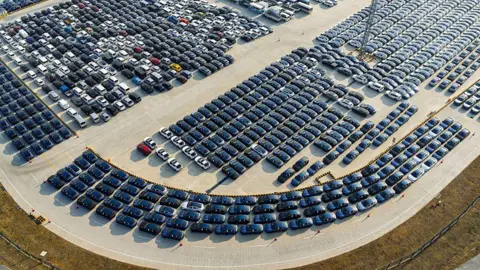
The deal reduces tariffs on Chinese EVs from 100% to 6.1% for the first 49,000 vehicles imported each year, with potential hikes reaching up to 70,000 in five years.
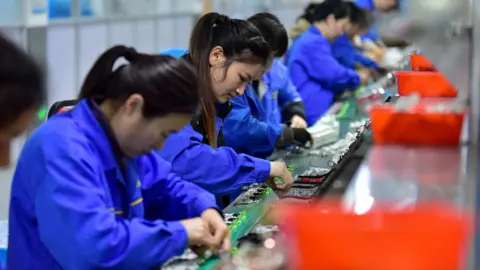
As China remains the world's largest producer of EVs, this deal is expected to create cheaper options for Canadian consumers, yet may also pose challenges for local manufacturers.
Ultimately, Carney's decision to strengthen trade ties with China signals a crucial recalibration of Canada's economic relations, adapting to a world where the future of US trade policy remains uncertain.