In brief
NASA's Artemis II mission, launched on April 1, 2026, has successfully passed significant tests with its crew and spacecraft performing beyond expectations. The mission seeks to assess the feasibility of landing humans on the Moon by 2028, giving rise to optimism about the future of space exploration. The crew has experienced human-machine interactions firsthand, revealing both challenges and successes in the spacecraft operation. As they prepare for re-entry, the potential for a successful Moon landing is taking shape more clearly.
NASA's Artemis II mission has passed every major test since its launch on 1 April, with its rocket, spacecraft, and crew performing better than engineers had dared to hope for.
The mission's first six days have shown that the Orion capsule works as designed with people on board for the first time - something no simulator could prove.
The greatest achievement, however, has been the hope and optimism generated by the Artemis crew, which seems timely given the current global climate.
The bigger question remains - is a Moon landing by 2028 achievable?
What Artemis II has taught us so far
A few days after NASA's Space Launch System (SLS) reached the launch pad, it became clear that the agency needed to stop treating each rocket as a work of art and start launching with the frequency required for serious business.
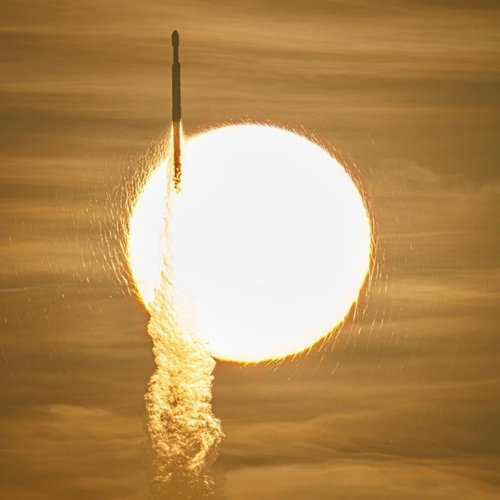
The SLS generated 8.8 million pounds of thrust at liftoff and performed flawlessly at every stage of the ascent. Orion's path to the Moon has been remarkably accurate, requiring no additional adjustments.
A Rocket that did the job
After a flawless engine burn, the spacecraft is now on a mission to the Moon, with its upcoming re-entry into Earth's atmosphere being the next major test. This will define the mission's legacy more than any image of the Moon's far side.
Great science or NASA hype?
While the scientific returns from the Artemis II mission are seen as valuable by NASA, experts also caution that the artistic impact of images returned from the crew holds more significance than purely scientific contributions.
The biggest test to come
The real question pertains to whether NASA can maintain the momentum established by this mission in pursuing a Moon landing by 2028. The journey has ignited inspiration and hope reminiscent of the Apollo program but underlined that much remains to be done for actual landings on the lunar surface.