In brief
Ajit Pawar, Maharashtra's deputy chief minister and a significant political figure, died in a plane crash, raising concerns about the future of his political faction and the potential realignment in Maharashtra politics. His legacy, marked by ambition and familial rivalry, complicates the state’s governance landscape amidst ongoing power struggles.
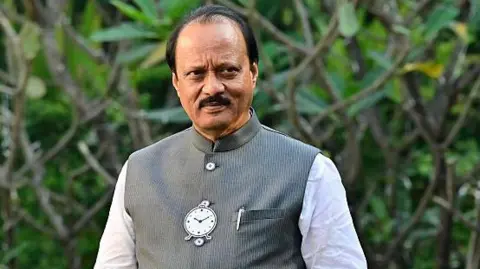
The sudden death of influential leader Ajit Pawar in a plane crash has left a significant political void in Maharashtra, India's richest state. Pawar, who held the position of deputy chief minister, died alongside four others on Wednesday, leading to a wave of uncertainty across the state's complex political landscape.
Maharashtra’s political environment is notorious for its dynamic alliances and regional loyalties, and Ajit Pawar was known for navigating these challenges with a pragmatic approach. His impressive ascent through the ranks of the Nationalist Congress Party (NCP) was often shadowed by his uncle, Sharad Pawar, a long-time political heavyweight and founder of the NCP.
Born in 1959 and stepping into politics in the 1980s, Ajit Pawar built his political identity in the family stronghold of Baramati, focusing on local governance and regional political networks. He often saw himself striving to emerge from his uncle's dominating presence within the party.
Ajit Pawar's style was directly in contrast to his uncle's; where Sharad was measured and strategic, Ajit was known for his bluntness, earning him both devoted followers and vocal critics. Despite his efforts to assert his authority, he often felt sidelined, a reality that ignited tensions culminating in public rifts within the party.
His political drama intensified in recent years, particularly with his controversial alliance with the BJP in 2019, which briefly disrupted familial ties and created rival factions within the NCP. Though he later returned to his uncle's fold, the damage was done, and a significant breach formed.
The complete fallout was realized in 2023 when he separated from the NCP, joining a new coalition with the BJP, further fracturing the family and political landscape. His recent actions had begun to stir talks of potential reconciliation with his uncle's faction, but his abrupt death has severed these discussions, leaving the future leadership within the NCP in question.
Questions now loom over the acceptance of Ajit Pawar's successors by those who defected with him, raising concerns about loyalties and continuing fragile alliances. Ajit Pawar's political journey is a stark reminder of how personal ambitions can intricately weave their way into the fabric of politics, shaping destinies in unexpected ways.