In brief
After a brief grounding of around 6,000 aircraft, Airbus has completed essential software updates, allowing flights to resume normal operations. The measures were prompted by concerns that solar radiation could interfere with aircraft systems. While most airlines have reported minimal disruption, some older planes still require further upgrades.
Thousands of Airbus planes are returning to normal service after being briefly grounded following a warning that solar radiation could interfere with onboard computers.
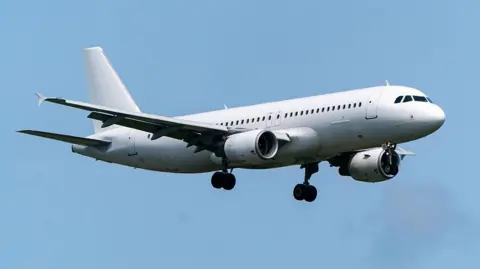
The aerospace giant, based in France, said about 6,000 of its A320 planes had been affected, with most requiring a quick software update. Some 900 older planes need a replacement computer.
On Saturday, French Transport Minister Philippe Tabarot said the updates went very smoothly for more than 5,000 planes, and fewer than 100 still needed the update.
Airbus CEO Guillaume Faury apologized for what he called logistical challenges and delays. He said teams were working to ensure that updates are completed as swiftly as possible. On Saturday morning, several Air France flights in and out of Paris's Charles de Gaulle Airport were delayed or cancelled.
American Airlines said it expected operational delays but added that the vast majority of updates would be carried out by Saturday. Delta Airlines said it believed the impact on its operations would be limited.
The UK Civil Aviation Authority stated that airlines operating in the country worked through the night to apply the update, and air traffic had not been seriously affected. London's Gatwick Airport reported some disruption, while Heathrow said it had not experienced any cancellations. Manchester Airport expected no significant problems, and Luton Airport noted there was no expected impact. British Airways and Air India were also reportedly not heavily impacted by the issue.
On Saturday, EasyJet announced it had completed updates on a significant number of its aircraft and planned to operate normally. Wizz Air also confirmed it was running as scheduled after executing updates overnight. In Australia, budget airline Jetstar cancelled 90 flights due to the grounding but most of its aircraft have since undergone updates.
Air New Zealand had grounded its A320 planes, but all flights have now resumed after completing the update.
Airbus discovered the issue after a JetBlue Airways flight from the US to Mexico lost altitude and made an emergency landing in October, injuring at least 15 passengers. The company identified a problem with the aircraft's computing software, which calculates a plane's elevation. It was found that at high altitudes, data could be corrupted by intense radiation periodically released by the Sun. Alongside the A320, the company's best-selling aircraft models A318, A319, and A321 were also affected. Older planes that require new computers remain grounded as the timeline for replacements is uncertain, depending on availability.