The recent international conference on antisemitism in Jerusalem faced significant backlash as a number of prominent Jewish leaders opted to boycott the event over the involvement of far-right politicians from Europe. Notably absent were Israel's President Isaac Herzog and UK Chief Rabbi Sir Ephraim Mirvis, both expressing concerns regarding the event's guest list.
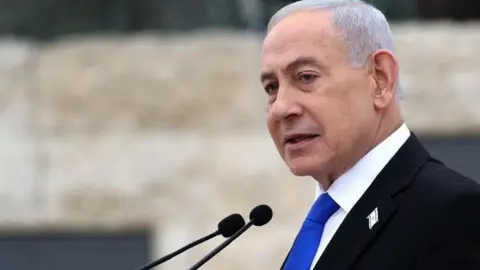
During the conference, Israeli Prime Minister Benjamin Netanyahu raised alarms over the escalating threat of antisemitism, drawing historical parallels to the unchecked intolerance leading to the Nazi Holocaust. He emphasized that the fates of free societies depend on their commitment to combat antisemitism, echoing sentiments shared in his family’s history.
The invitation extended to representatives from far-right parties—including France's National Rally, Spain's Vox, and the Sweden Democrats—ignited controversy among attendees. UK government antisemitism adviser Lord Mann remarked that no lessons could be learned regarding antisemitism from these figures, indicating a widespread discontent with their presence.
Chief Rabbi Mirvis's office stated his decision to withdraw was based on concerns about the participation of specific populist politicians. Instead, President Herzog conducted a separate gathering with Jewish leaders to address the boycott, seen as a diplomatic move amidst rising tensions.
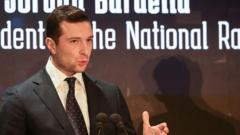
Amichai Chikli, Israel's Diaspora Affairs Minister and a member of Netanyahu's Likud party, organized the conference and defended the decision to invite far-right figures, asserting that they had been unfairly maligned in their support of Israel. The event featured speakers like National Rally President Jordan Bardella, who, although acknowledging his party’s turbulent past, positioned it as a defender of French Jews against perceived threats.
The conference aimed to address pressing topics such as perceived anti-Israel bias and the impact of radical Islam on growing antisemitism. The notable absence of key Jewish leaders casts a shadow over the efficacy and inclusivity of the discussions held in Jerusalem, highlighting a rift within the community regarding the narratives being promoted on such a significant platform.
During the conference, Israeli Prime Minister Benjamin Netanyahu raised alarms over the escalating threat of antisemitism, drawing historical parallels to the unchecked intolerance leading to the Nazi Holocaust. He emphasized that the fates of free societies depend on their commitment to combat antisemitism, echoing sentiments shared in his family’s history.
The invitation extended to representatives from far-right parties—including France's National Rally, Spain's Vox, and the Sweden Democrats—ignited controversy among attendees. UK government antisemitism adviser Lord Mann remarked that no lessons could be learned regarding antisemitism from these figures, indicating a widespread discontent with their presence.
Chief Rabbi Mirvis's office stated his decision to withdraw was based on concerns about the participation of specific populist politicians. Instead, President Herzog conducted a separate gathering with Jewish leaders to address the boycott, seen as a diplomatic move amidst rising tensions.
Amichai Chikli, Israel's Diaspora Affairs Minister and a member of Netanyahu's Likud party, organized the conference and defended the decision to invite far-right figures, asserting that they had been unfairly maligned in their support of Israel. The event featured speakers like National Rally President Jordan Bardella, who, although acknowledging his party’s turbulent past, positioned it as a defender of French Jews against perceived threats.
The conference aimed to address pressing topics such as perceived anti-Israel bias and the impact of radical Islam on growing antisemitism. The notable absence of key Jewish leaders casts a shadow over the efficacy and inclusivity of the discussions held in Jerusalem, highlighting a rift within the community regarding the narratives being promoted on such a significant platform.