In brief
As tensions rise between the US and Iran, recent strikes carried out by US and Israeli forces on Iranian infrastructure have led to significant destruction and civilian casualties. The attacks have targeted military and civilian sites including bridges, steel plants, and pharmaceutical facilities. Questions arise about the legality of these strikes under international law, with experts warning that ongoing actions could potentially constitute war crimes.
President Donald Trump has pledged to target infrastructure across Iran unless the country reaches an acceptable deal to end the war with the US and Israel by Tuesday night.
Promising to bomb the country back to the Stone Ages, Trump said US forces would target bridges and power plants across Iran. He also posted to social media on Tuesday that a whole civilization will die tonight if an agreement is not struck.
There has been a spate of attacks on infrastructure critical to ordinary Iranians since the conflict began, with schools and hospitals damaged.
BBC Verify has confirmed that US and Israeli strikes have targeted at least two steel plants, three bridges, and a pharmaceutical plant over the past two weeks.
Some senior Democrats in the US Congress and UN officials have warned that strikes like these could amount to war crimes. But in a news conference on Monday, Trump dismissed those concerns.
What civilian infrastructure has been hit by strikes?
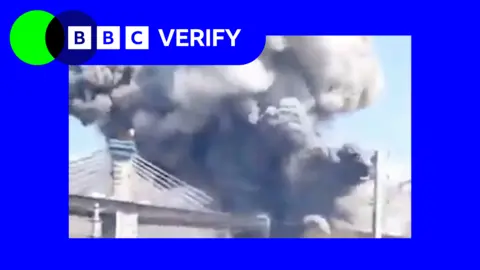
On Thursday, US aircraft attacked a bridge which had been under construction in the central city of Karaj. Local officials said the attack killed at least 13 people.
Footage confirmed by BBC Verify showed at least two strikes on the bridge. A large gap in the bridge can be seen in the aftermath of the attack, with construction cranes visible on either side of it.
Trump later shared footage on the strike online, writing that the biggest bridge in Iran comes tumbling down, never to be used again, adding: Much more to follow.
A number of steel facilities have also been targeted. On March 27, verified footage showed smoke billowing from the Isfahan Mobarakeh Steel company.
Israeli Prime Minister Benjamin Netanyahu has claimed that the strikes have disrupted up to 70% of Iran's steel manufacturing capability. Arman Mahmoudian, a research fellow at the University of South Florida's Global and National Security Institute, said the damage could seriously impact the Iranian economy.
Mahmoudian noted that attacks on Iran's pharmaceutical industry could pose major issues for the healthcare system. One of the companies targeted was the Tofigh Daru Research & Engineering Company, which produces anaesthetic and cancer drugs.
While pharmaceutical goods represent only a small part of Iran's economy, strikes against the sector could impact access to medicine at a time of need and undermine Tehran's medical independence.
Recently, educational facilities have been damaged in strikes, with images showing debris around Shahid Beheshti University in Tehran.
In another incident, religious buildings have also faced attacks, leveling parts of the Husseinya Mosque. Local officials reported casualties among civilians.
The UN and legal experts continue to question the legality of these strikes, assessing whether they constitute war crimes given their impact on civilian infrastructure.
In summary, these ongoing attacks represent a significant shift in the US-Israel strategy towards Iran, raising serious humanitarian and legal concerns on the global stage.