In brief
Delhi faces a health crisis as pollution levels surge, prompting government action and concern for residents’ wellbeing.
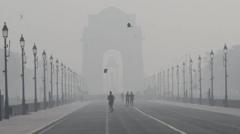
Delhi is currently facing a severe air quality crisis, with pollution reaching "very poor" and "severe" classifications in recent days. Reports indicate that pollution has surged, exceeding World Health Organization (WHO) safe limits by an alarming 25 to 30 times at various locations throughout the city. Experts project that pollution levels are set to worsen due to unfavorable weather conditions, the use of firecrackers during the upcoming Diwali festival, and the burning of agricultural residues in nearby states.Each year, between October and January, Delhi and other northern Indian cities are engulfed in toxic smog that disrupts daily life, forcing business closures and school evacuations. On Monday, the concentration of PM 2.5, a dangerous particulate matter that poses serious health risks, reached as high as 350 micrograms per cubic meter in certain areas, according to data from the government’s Safar website. Air quality is classified as "very poor" when PM 2.5 levels between 300 to 400 are recorded, and it is deemed "severe" when reaching 400 to 500.The persistent pollution in Delhi is largely attributed to factors such as low wind speed, vehicular emissions, dust, and smoke produced from burning crop stubbles, particularly during the harvest season in Punjab and Haryana. Farmers in these states have echoed the need for financial and technical assistance to adopt alternative stubble clearing methods, but current government initiatives have proven insufficient.As Diwali approaches, the ban on firecrackers—announced yearly by the Delhi government—comes into effect. However, enforcement of such bans has historically been ineffective, with many individuals sourcing fireworks from other regions. In response to the escalating air quality crisis, authorities have implemented the Graded Response Action Plan (GRAP), which restricts coal and firewood use and prohibits diesel generator operation for non-essential services. Residents have been advised to minimize outdoor activities and utilize public transportation to mitigate vehicular pollution. The situation puts a spotlight on the ongoing struggle for clean air in India’s capital.