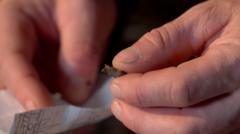
In the harrowing reality of the Ukraine conflict, innovative medical technology is emerging to save lives. Serhiy Melnyk, a courageous Ukrainian serviceman, recently shared his traumatic experience of sustaining severe injuries from drone shrapnel. This small, rusty shard once lodged in his heart not only pierced his lung but also grazed his kidney. "I didn't even realize what it was at first," he recalls, having initially attributed his shortness of breath to his body armor. Fortunately for Serhiy, medical professionals swiftly used a cutting-edge magnetic extractor to remove the dangerous fragment, allowing him to survive what could have been a fatal injury.
The rise of drone warfare has led to an alarming increase in combat injuries, with shrapnel wounds constituting a staggering 80% of battlefield trauma, according to Ukrainian military medics. These injuries often result from drones carrying explosives, which can cause complex wounds. In Serhiy's case, luck played a role in his recovery, but it was the introduction of magnetic extractors that ensured his survival.
Cardiovascular surgeon Serhiy Maksymenko explained the innovative extraction process employed in Serhiy's surgery. "You don't have to make large cuts in the heart. I just make a small incision, insert the magnet, and it pulls the shrapnel out." This minimally invasive technique has been transformative, with Maksymenko's team performing over 70 successful heart surgeries using the device in just one year.
The development of these magnetic extractors was driven by the urgent need communicated by front-line medics. Oleh Bykov, a former lawyer turned volunteer, played a crucial role in bringing the concept to life. Despite the historical context of magnets being used for metal removal long ago, Oleh's team adapted this idea for modern needs—creating various flexible and strong models for different surgical applications. The precision of operations has increased, allowing surgeons to minimally invade wounds while effectively extracting metal fragments.
This groundbreaking tool has drawn praise from medical experts worldwide, including David Nott, a veteran of war zones. He emphasized the importance of the magnetic extractor in addressing the complexities of fragmentation wounds in combat. "To simply find them using a magnet is ingenious," he stated, highlighting the dangers of manual searches.
With 3,000 magnetic extractors now distributed across Ukraine, the significance of this technology cannot be overstated. Medics like Andriy Alban, who often work in challenging conditions under fire, have found it invaluable in saving lives. While official certification for the device is pending, its use in exceptional cases during martial law underscores the need for immediate action in the face of danger.
Oleh remains unyielding in advocating for the extractor, stressing that its effectiveness far outweighs bureaucratic constraints. "These devices save lives," he insists.
Back in Lviv, Serhiy Melnyk's relief is palpable as his wife, Yulia, expresses gratitude for the life-saving technology. "Thanks to them, my husband is alive," she says, underscoring the broader impact of this innovative approach to battlefield medicine in Ukraine.