In brief
In London, Douna Haj Ahmed learns the chilling truths of her husband Abdullah Al Nofal's detention in Al-Khatib prison during the Syrian civil war, revealing the emotional toll of past traumas and the enduring impact of Assad's regime.
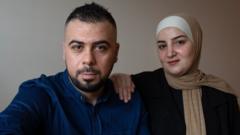
In early December, Douna Haj Ahmed, a Syrian refugee, faced a moment of chilling revelation as she witnessed prisoners escaping the notorious Al-Khatib prison on the news from their home in London. Beside her, tears streaming down his face, Abdullah Al Nofal, her husband for eight years, pointed out, "This is where I was arrested, this is the place." This marked a pivotal moment, as Abdullah finally began to disclose the inhumane experiences he endured during his detention at the infamous facility.Douna, who has also seen her brothers arrested amid Syria's brutal civil war, had long suspected her husband suffered greatly, yet the full extent of his trauma was unveiled only now. "Abdullah does not like to share things emotionally; he always wants to appear strong," she noted. "It was a turning point. I saw him weak, I saw him crying... Now we want people to hear what Syrians went through."Abdullah’s journey began on a fateful day in July 2013 when he was detained at a checkpoint while working as a storekeeper for the International Committee of the Red Cross in Damascus. Previously participating in peaceful protests in Deraa, he distanced himself as the uprising escalated into violence. Upon being singled out at the checkpoint, he was blindfolded, handcuffed, and transported to a military facility where he endured solitary confinement and severe beatings.Describing his time in Al-Khatib, Abdullah recalled the despair and fear he felt in the darkness. "I remember it was so dark for three days. It was completely silent. You feel so lonely," he shared. Once transferred to a cell with around 130 other prisoners, he faced the harrowing reality of widespread torture and death. The Syrian Observatory for Human Rights notes that around 60,000 individuals suffered torture and death in detention facilities like Al-Khatib over the course of the civil war.Two years ago, a landmark trial in Germany convicted a former Syrian colonel for crimes against humanity linked to Al-Khatib, highlighting the systematic abuse recorded by witnesses. Abdullah described the traumatic environment where he frequently heard the anguished screams of fellow detainees and witnessed their physical suffering. "Every time you touch someone, they will scream because of their wounds," he recounted.After enduring 12 days of torment, Abdullah faced brutal interrogations, where he was beaten and coerced to confess to false accusations. His survival hinged upon fabricating a story that spared him further torment, ultimately leading to his release after a month in captivity. Abdullah later fled Syria and settled in London with Douna, creating a new life.Now feeling a sense of safety, Abdullah courageously relays his tale of horror to Douna. "We finally finished with the regime; we can say we are really free right now," he remarked. Douna, a passionate human rights activist, was profoundly moved as she processed her husband's hidden ordeal. "I was hearing him and I was crying. There could be more horrors, more stories beyond what I've heard,” she said, emphasizing the silence that still envelops many victims.Empowered by their new freedom, the couple seeks to share their story, ensuring that the voices of those who suffered under Assad's regime are not forgotten. "We are privileged to tell our stories. Lots of people died without being heard," Douna reflected, underscoring the imperative of remembering the past while advocating against ongoing injustices.