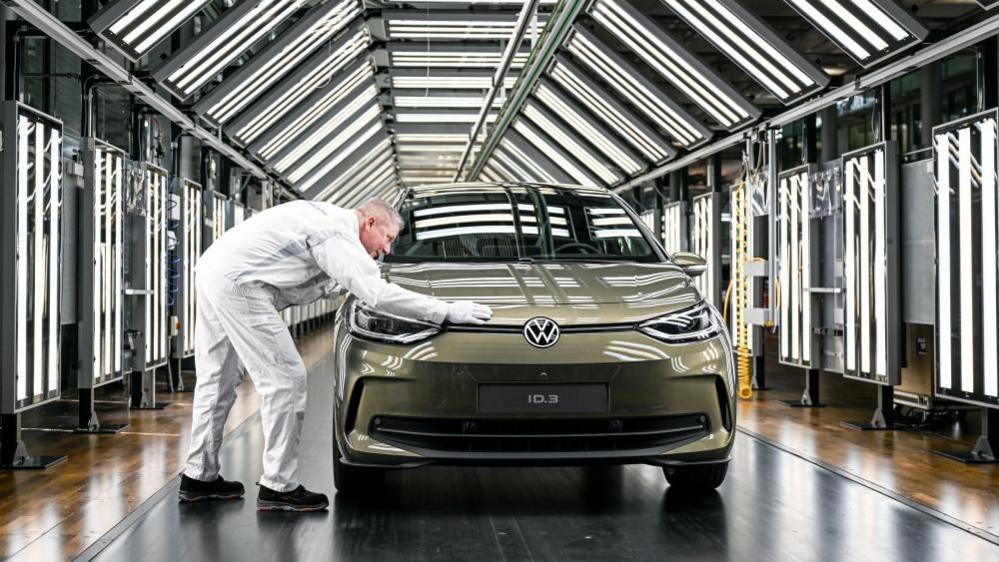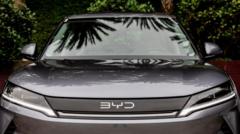
Authorities in Brazil's northeastern Bahia state intervened, halting the construction of a new factory for BYD, a notable player in the electric vehicle (EV) market. An investigation by the Public Labour Prosecutor's Office (MPT) revealed that workers, reportedly employed by Jinjiang Construction Brazil, were living in conditions that qualified as "slavery-like." This involved inadequate housing—rooms with no mattresses—and shared bathrooms for excessive numbers of workers.
The MPT statement indicated that workers had their passports and salaries withheld, creating a situation of forced labor, as many were unable to terminate their contracts without severe financial repercussions. BYD has since severed connections with the construction firm and expressed its dedication to adhering to Brazilian laws. In the wake of the situation, the company stated that the affected employees had been relocated to hotels and that it was actively working to rectify the conditions associated with subcontracted laborers.
Despite the setbacks, BYD's ambitions for the Brazilian market remain robust. The factory was expected to be operational by March 2025 and would have marked BYD's first manufacturing plant outside Asia. This increased involvement in Brazil follows BYD's previous factory opening in São Paulo, which focused on electric bus chassis production in 2015. BYD has committed a substantial investment of 3 billion reais ($484.2 million) to advance its manufacturing capabilities in Brazil, underscoring the country's critical role in the company's global strategy.
As the EV sector grapples with international pressure—such as heightened tariffs on Chinese products from the U.S. and EU—the halt in Brazil serves as a reminder that compliance with labor standards is paramount in maintaining a positive corporate reputation and successful international operations.
The MPT statement indicated that workers had their passports and salaries withheld, creating a situation of forced labor, as many were unable to terminate their contracts without severe financial repercussions. BYD has since severed connections with the construction firm and expressed its dedication to adhering to Brazilian laws. In the wake of the situation, the company stated that the affected employees had been relocated to hotels and that it was actively working to rectify the conditions associated with subcontracted laborers.
Despite the setbacks, BYD's ambitions for the Brazilian market remain robust. The factory was expected to be operational by March 2025 and would have marked BYD's first manufacturing plant outside Asia. This increased involvement in Brazil follows BYD's previous factory opening in São Paulo, which focused on electric bus chassis production in 2015. BYD has committed a substantial investment of 3 billion reais ($484.2 million) to advance its manufacturing capabilities in Brazil, underscoring the country's critical role in the company's global strategy.
As the EV sector grapples with international pressure—such as heightened tariffs on Chinese products from the U.S. and EU—the halt in Brazil serves as a reminder that compliance with labor standards is paramount in maintaining a positive corporate reputation and successful international operations.