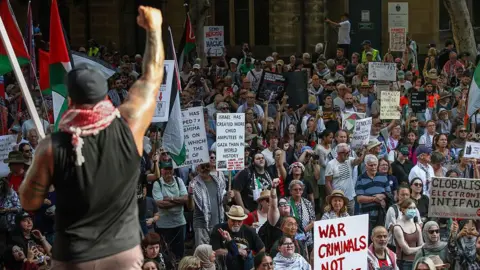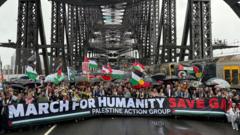
A momentous pro-Palestinian demonstration unfolded on the Sydney Harbour Bridge today, authorized by the Supreme Court just one day prior, and marking a significant event in the trajectory of activism for Palestinian rights. The March for Humanity attracted thousands, even as heavy rain lashed the city, underscoring the contentious yet passionate nature of the cause.
Notable figures, including WikiLeaks founder Julian Assange, federally elected MP Ed Husic, and former Premier Bob Carr, joined the crowd, emphasizing the event's importance. The Sydney Harbour Bridge had previously been closed for public assemblies earlier this year when 50,000 people marched during World Pride.
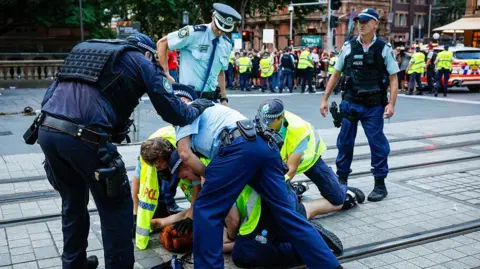
However, just two hours into the march, participants received a text message from the New South Wales Police urging attendees to cease movement and return south in a "controlled" manner for safety reasons. The police have yet to release an estimated attendance figure for the protest. In response to anticipated traffic disruptions, Transport for NSW advised motorists to steer clear of the city.
The Palestine Action Group, a local activist organization, initiated planning for the bridge march in light of what they described as "atrocities" occurring in Gaza. Initially, the police denied their application due to a lack of time to create a traffic management plan and concerns over crowd safety. In a statement, NSW Premier Chris Minns voiced concerns about maintaining order in the city, suggesting that such a large protest on the bridge was impractical.
Despite the police's prohibition application being rejected by the NSW Supreme Court just 24 hours prior to the event, Justice Belinda Rigg acknowledged safety concerns but ultimately supported the march, stating there was no evidence that prohibiting the event would improve public safety. This decision allowed the bridge closure to protect demonstrators under the Summary Offences Act, preventing them from facing charges associated with public assembly.
The decision drew criticism, particularly from the NSW Jewish Board of Deputies, who expressed disappointment over the court's ruling via their social media channels. Parallel to these developments, global pressure mounts for Australia to formally acknowledge Palestinian statehood, with nations like France, Canada, and the UK expressing intentions to do so at the upcoming United Nations General Assembly in September. Prime Minister Anthony Albanese noted that Australia will only recognize a Palestinian state if conditions are met to ensure long-lasting security for Israel, firmly diverting pressure from other nations.