In brief
German political landscape sees the rise of Alice Weidel, whose contradictory persona both challenges and reinforces the far-right movement, as she aims for mainstream acceptance.
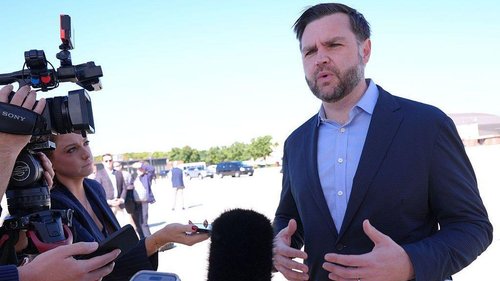
In a curious twist of modern politics, Alice Weidel, the leader of the nationalist Alternative for Germany (AfD), emerges as a central figure in a challenging narrative that intersects personal life with hardline politics. Despite the AfD's staunch anti-immigration stance and a traditional view of family—which she defines as a heterosexual couple with children—Weidel herself resides in Switzerland with her Sri Lankan-born spouse and their two sons.This past week, Vice President JD Vance spoke at the Munich Security Conference, criticizing Germany for marginalizing far-right parties without specifically naming the AfD. Shortly thereafter, he met with Weidel, signaling a potential alliance between her party and American interests. Voicing parallels between contemporary European democracy and past authoritarian regimes, Vance’s remarks inadvertently elevated Weidel’s profile just days before a crucial national election, wherein the AfD positioned itself firmly in second place in popular support.At 46, Weidel has swiftly become the public face of the AfD, distinguished not only by her sharp political rhetoric but also by her polished appearance, featuring signature turtlenecks and pearl necklaces. This modern and cosmopolitan image starkly contrasts the party’s historical associations with extremist factions, including neo-Nazi groups. However, analysts warn that under Weidel’s leadership, the party's radical edges have become sharper. Ann-Katrin Müller, an expert on German politics, points out that, “With Alice Weidel at the helm, the AfD has steadily become more radical.”Weidel's unique position in the political sphere poses significant questions about the future of Germany's far-right movements and their potential influence on European politics. As she deftly balances her public persona with her party's controversial policies, the implications of her leadership continue to unfold on both domestic and international stages. The upcoming election results will further clarify the AfD's trajectory and Weidel's role within this polarized landscape.