In brief
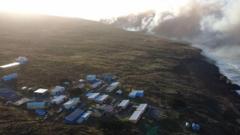
For nearly a month, devastating wildfires have consumed 55% of Amsterdam Island, a remote French territory in the southern Indian Ocean. The island, situated between Australia, Antarctica, and Madagascar, lacks permanent residents but has hosted scientific research since the 1980s.
The fires began near the Pointe Bénédicte observatory, identified by a scientist on January 15. Due to strong winds reaching up to 40 km/h and parched conditions, the fire quickly spread toward the Martin-de-Viviès research center, leading to the evacuation of 31 researchers to Réunion Island. Rémi Chazot, a computer scientist on the island, noted the fortunate timing of a lobster fishing boat, which rescued the researchers just in time. Satellite images have revealed that infrastructures such as solar panels, food supplies, and communication lines were compromised by the flames. Ecologists are particularly disturbed as the island's unique biodiversity, notably breeding grounds for the Amsterdam Albatross and other seabirds, may be severely impacted. This fire marks the first cessation of atmospheric research on the island in 45 years, with scientists worried about the consequences for climate data. The French Navy has initiated a reconnaissance mission to assess the fire, secure the settlement, and investigate the origins and spread of the blaze. Conservationists emphasize the urgency of restoration efforts, with hopes to re-establish the island's energy and water systems after this unprecedented environmental crisis.