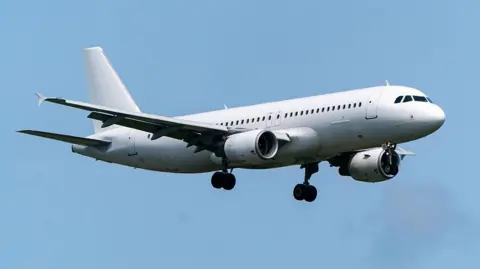
A recent study has sparked discussion on the climate-damaging effects of jet condensation trails, commonly known as contrails, suggesting that addressing this issue could be relatively inexpensive. Researchers estimate that for less than £4 per flight, aviation experts could effectively reduce the warming impacts of these vapours, which double the heating attributed to fossil fuel use in aviation. The discussion on contrail solutions is set to take place for the first time at the UN climate conference, COP29, occurring in Baku.
Contrails form when jets operate in cold, humid air, leading to water vapour condensing on unburned fuel particles in the exhaust, creating visible trails in the sky. Although the formation of contrails has been understood for decades, the climate implications have only gained attention in recent years. Carlos Lopez de la Osa from the Transport & Environment group highlights how these trails create artificial cloud layers that trap heat from the earth, contributing significantly to global warming.
While some conspiracy theories wrongly claim contrails are "chemtrails" designed to control the population or spread disease, experts categorically reject these notions as unfounded. Matteo Mirolo from Breakthrough Energy emphasizes the need for clarity in discussing these issues, stating that scientific evidence does not support such theories.
The new research indicates that a mere 3% of flights contribute to about 80% of the warming caused by contrails, suggesting that adjusting flight paths for a limited number of aircraft could significantly mitigate warming effects. Geography and flight timing play crucial roles in contrail formation, with most warming occurring in regions like North America and Europe, particularly with evening and winter flights.
Experts suggest that like current practices of circumventing turbulence and thunderstorms, flight planning can incorporate contrail avoidance. Given the ongoing global focus on sustainable aviation fuels, researchers argue that addressing contrails presents an accessible and effective climate solution that could yield major benefits without substantial investment.
Events like COP29 aim to heighten awareness of the potential for straightforward changes in aviation practices to combat climate change effectively.